Panic buying sparks spike in fertilizer sales
Prabhudatta Mishra — New Delhi
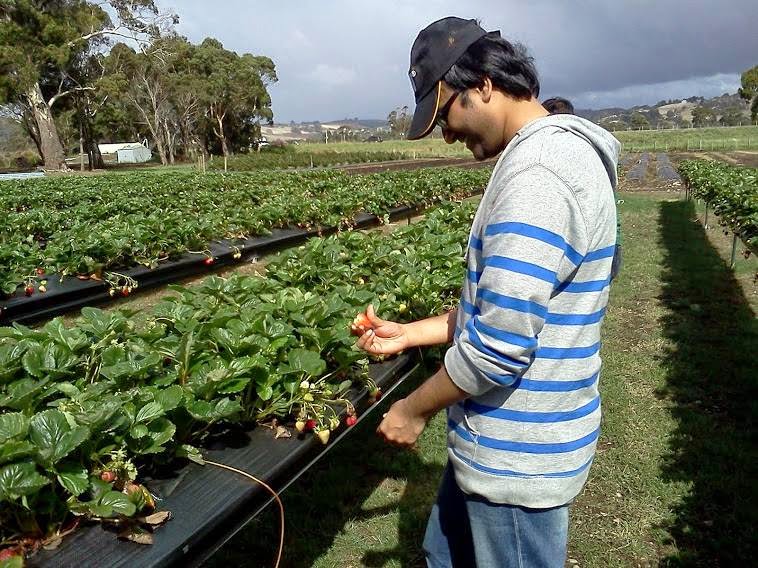
Farmers appear to be stock-piling fertilizers as government sales data for March show a sharp spike in demand. By March 23, the volume of crop nutrients purchased had already 0vertaken the estimated demand for the full month and surpassed sales from the same period last year.
As much as 20.21 lakh tonnes of urea were sold during February 28-March 23 as against 16.2 lt in the whole of March 2025 and the estimated demand of 14.96 lt for the month.
Similarly, 4.78 lt of di-ammonium phosphate (DAP) was sold during that period against an estimated demand of 2.43 lt for the whole of March 2026, while 1.58 lt of muriate of potash (MoP) was sold against 1.8 lt of estimated demand, and 7.22 lt of complex was sold against 7.05 lt of estimated demand.
While the government has neither confirmed nor denied the sudden increase in sales this month, it maintained that there was enough stock to meet the demand. Sources said higher demand was noticed from a few States, including Telangana, Madhya Pradesh, Uttar Pradesh and Maharashtra.
Urea sales this month — at 2.63 lt up to March 6 — rose to 6.74 lt by March 13, up 56 per cent week-on-week. Sales have risen further by about 13 lt during March 14-23, they said.
STOCK VERIFICATION
A senior government official of an eastern state admitted that a few districts had reported higher sales in March. Detailed instructions had been given to the Collectors to watch daily sales figures and undertake physical stock verification. In western Uttar Pradesh, fertilizer purchase, which is mainly meant for maize and sugarcane, has risen in the last few days.
In Ludhiana, Punjab, the secretary of a cooperative society said there had been a marginal increase in sales this month, with mostly farmers buying for their potato and maize crops.
Rampal Jat, a farmer leader from Rajasthan, noted that a significant uptick in fertilizer sales is still some time away. He explained that the state is currently in a lean period and most farmers lack the financial or storage capacity to stockpile supplies so far in advance.
Raghunath Dada Patil, a farmer leader from Maharashtra, said the government needs to verify whether farmers are really buying higher or whether retailers are keeping the stock by showing sales on the record.
“There is a clear preference for fertilizers that are cheaper and where farmers have been facing scarcity season after season. In irrigated areas where paddy planting begins around June 1, farmers, in anticipation of a shortage, have stocked up in advance. It will be interesting to see if farmers continue to buy in May,” said agriculture scientist A K Singh.
Manufacturing drives industrial growth to 5.2% in February
Production output expands 6%; mining & power post modest gains
Our Bureau — New Delhi
With strong performance of the manufacturing sector, industrial growth, as measured by the Index of Industrial Production (IIP), rose to 5.2 per cent in February from 5.1 per cent in January.
LEADING SECTOR
According to data released by the Statistics Ministry, the manufacturing sector’s output growth accelerated to 6 per cent in February 2026 compared to 2.8 per cent in the year-ago month. Mining production growth slightly improved to 3.1 per cent compared to 1.6 per cent recorded a year ago. Power generation growth stood at 2.3 per cent in February, down from the 3.6 per cent expansion seen in the year-ago period.
MOMENTUM STEADY
Rajeev Sharan, Head of Research at Brickwork Ratings, stated that on a month-on-month basis, the index eased from January’s high. He described this as a “natural correction” after the strong December–January run-up rather than a fundamental loss of momentum, noting that capital goods output continues to rise sequentially. Overall, the data confirms that investment-linked sectors are anchoring growth, while softer consumer non-durables and modest gains in mining and electricity highlight areas where recovery remains incomplete.
BASE EFFECT
Devendra Kumar Pant, Chief Economist at India Ratings & Research (Ind-Ra), noted that industrial growth in February benefited from a low base effect. Post-festive demand has remained relatively strong, with average growth from November 2025 to February 2026 reaching 6.4 per cent, the highest since August-November 2023.
WEST ASIA CRISIS
While demand has been strong, the West Asia crisis is expected to alter the situation. Pant highlighted reports of LPG shortages forcing certain industries to scale down production. Additionally, a possible moderation of remittances, particularly from West Asia, is expected to impact demand and, consequently, industrial production.
“IIP growth in March 2026 is likely to be impacted by the base effect and the initial impact of the West Asian crisis. Ind-Ra expects it to grow 3.9 per cent,” Pant said.
Fiscal deficit touches 80% of RE in April-February
Our Bureau — New Delhi
India’s fiscal deficit in the April-February period of the current fiscal reached ₹12.5 lakh crore, or over 80 per cent of revised estimates (RE), according to government data released on Monday. This is lower than the ₹13.5 lakh crore or 86 per cent of estimates recorded during the same period last year.
REVISED ESTIMATES
Fiscal deficit represents the gap between the government's income and expenditure. Finance Minister Nirmala Sitharaman, during the Union Budget presentation on February 1, revised the fiscal deficit target to ₹15.58 lakh crore (from ₹15.7 lakh crore), which is 4.4 per cent of the GDP. While economists expect the government to meet the absolute deficit number, some suggest it may end up slightly higher as a percentage of the GDP.
In February alone, the deficit widened to ₹2.71 lakh crore from ₹1.77 lakh crore a year earlier, primarily driven by higher capital expenditure.
REVENUE RISES
On the revenue front, net tax collections rose to ₹21.5 lakh crore during this period, compared to ₹20.2 lakh crore a year ago. Non-tax revenues also saw an increase to ₹5.8 lakh crore from ₹4.9 lakh crore. Total government expenditure stood at ₹40.4 lakh crore, up from ₹38.9 lakh crore in the corresponding period of the previous year.
EXPERT ANALYSIS
Aditi Nayar, Chief Economist at ICRA, noted that while the Centre’s capital expenditure (capex) needs to contract by 31 per cent in March 2026, its revenue expenditure (revex) is expected to expand by a sharp 45 per cent. She highlighted that the net cash outgo of ₹2 lakh crore announced under the 2nd Supplementary Demand for Grants (SDG) will likely keep expenditure elevated in March, ensuring the fiscal deficit remains aligned with the RE.
Overall, ICRA expects the fiscal deficit to settle at 4.5 per cent of GDP in FY26, slightly higher than the RE, due to a downward revision in nominal GDP figures.
FUTURE RISKS
Nayar also mentioned that an expected reduction in excise duty could result in a revenue loss of ₹1-1.2 lakh crore in FY27. Furthermore, she warned that the West Asia crisis has introduced material risks to the budget math for FY27, potentially keeping crude oil and natural gas prices elevated for a prolonged period, which could further strain both expenditure and revenue.
Digital villages: ₹3 lakh cr funds processed virtually
Panchayati Raj Institutions transferred ₹53,342 cr via eGramSwaraj-PFMS in FY26 alone
Dalip Singh — New Delhi
In a major milestone for grassroots governance, more than 2.5 lakh gram panchayats across India have collectively processed over ₹3 lakh crore in online payments since April 2019 through eGramSwaraj, the Ministry of Panchayati Raj’s digital platform.
Every rupee has gone directly to vendors and service providers in real time, with a full and transparent digital audit trail, the Ministry officials explained, saying the move is aimed at curbing mismanagement of rural funding.
PAPER TO VIRTUAL
Developed under the e-Swaraj initiative, the platform has fundamentally changed the way gram panchayats plan, account for and spend public money, overwriting the earlier regime of cash-based, paper-driven village-level expenditure. Now, the virtual system is fast, accountable and fraud-resistant, officials stated.
In FY26 alone, Panchayati Raj Institutions transferred ₹53,342 crore through the eGramSwaraj-PFMS interface, with 2,55,254 gram panchayats uploading their development plans on the portal during the same period, said Ministry officials. So far, a total of 1,60,79,737 vendors have registered.
The system covers traditional local bodies and Sixth Schedule areas in 28 States, including Kerala. Under the 14th Finance Commission, ₹2,00,292.20 crore was allocated to the gram panchayats. Out of this total allocation, ₹1,83,248.54 crore has been released, including ₹3,774.20 crore to Kerala.
“This milestone is the direct result of the Ministry of Panchayati Raj’s sustained and unrelenting commitment to making every panchayat digitally empowered. It stands as proof of the trust that over 2.5 lakh gram panchayats have placed in technology as the backbone of panchayat-level financial governance,” Secretary Panchayati Raj Vivek Bharadwaj told businessline.
The global economy’s many chokepoints
Excessive dependence enables extortion or other forms of pressure, exemplified by China’s rare-earth export controls, America’s enforcement of sanctions via SWIFT
Michael Spence
Iran’s effective closure of the Strait of Hormuz, through which about a fifth of the world’s oil and a quarter of its fertilizer passes, has highlighted a well-known vulnerability of our complex networked global economy: a single point of failure can create massive and costly disruptions. Yet such points of failure have been proliferating for decades.
Global trade flows through a number of other critical passages, which could also become disruptive bottlenecks. The Strait of Malacca — one of only two sea lanes linking the Indian Ocean to the Pacific — receives much attention in war simulations. When the Suez Canal was blocked for six days by the Ever Given in 2021, the disruption reverberated across supply chains for months. The Panama Canal raises similar risks.
MARKET CONCENTRATION
Excessive market concentration generates similar vulnerabilities. The dominance of a few Japanese producers of microcontrollers and engine airflow sensors meant that, when a massive earthquake and tsunami hit Japan in 2011, the global auto industry contracted sharply. Since then, automakers have diversified suppliers and built up buffer stocks to identify hidden single-source risks.
But diversification comes with trade-offs, as seen in the advanced-semiconductor sector. A single Dutch company, ASML, produces all the extreme ultraviolet lithography equipment required for advanced semiconductors. Only two companies, Taiwan’s TSMC and South Korea’s Samsung, can produce 2-nanometre semiconductors.
Governments are now promoting geographic diversification, with the US and EU providing incentives for TSMC and Samsung to diversify production, while China invests heavily to reduce dependence on external sources.
RESILIENCE VS EFFICIENCY
While this approach might increase resilience, the sector can ill afford lower efficiency. Advanced semiconductors are crucial for training generative-AI models and advancing physical-AI applications like robotics and autonomous vehicles.
Rare earths represent another notable vulnerability; China alone controls about 60 per cent of global rare-earth mining and over 90 per cent of processing. Points of failure also characterize the financial sector, such as the US-controlled SWIFT inter-bank messaging system.
Excessive dependence enables extortion or pressure, exemplified by China’s rare-earth export controls, America’s enforcement of sanctions via SWIFT, and US President Donald Trump’s use of tariffs.
OPTIMISING FOR RESILIENCE
In decentralized networks, investors often optimize for efficiency (where benefits are appropriable to the investor) rather than resilience (where benefits are spread across the network). However, networks with greater concentration of ownership are more likely to optimize for resilience.
For example, three companies (Alcatel Submarine Networks, SubCom, and NEC) maintain 87 per cent of the global undersea fiber-optic cable network. These "architects" have a powerful incentive to build resilience into the system as part of the package they sell. The same is true in the auto sector, where players like Toyota control large chunks of the supply chain, and for the internet, where the US government acted as the primary architect.
GOVERNMENT ROLES
When markets undersupply resilience, countries must step in. They can "onshore" production, increase international cooperation, or pursue a combination of both. A crude rule of thumb is that cooperation is less expensive than onshoring and more effective in principle, but much harder to achieve.
Whatever approach countries choose, eliminating or mitigating points of failure will be expensive. But, at a time of growing fragmentation and deteriorating cooperation, it is a cost they will have to bear.
The writer, a Nobel laureate in economics, is Emeritus Professor of Economics and a former dean of the Graduate School of Business at Stanford University.
Expectations from MPC
K Srinivasa Rao
The ongoing West Asian conflict poses unprecedented challenges for the Monetary Policy Committee (MPC), which meets in a week from now. The global economy faces turmoil, with rising inflation and possible slowing growth, disrupting the path of policy rates and inflation-control plans. While India is fairly resilient, it cannot fully insulate itself from global interest rate trends as FPI outflows threaten exchange rate stability.
POLICY UPDATES
A couple of policy updates will reassure the MPC: the CPI inflation glide path of 4% ± 2% is extended for another five years until March 31, 2031, and the base year for CPI inflation assessment is changed to 2023-24. Similarly, the base year for GDP is shifted to 2022-23, and the IIP base year shift to 2022-23 will take effect in May 2026.
EXTERNAL HEADWINDS
As of now, inflation and growth parameters are in the comfort range, but headwinds are strong. The energy crisis and supply chain disruptions caused by restricted freight passage through the Strait of Hormuz will impact economies reliant on energy imports. Iran’s attacks on US assets in Gulf states could cause collateral damage, such as the return of Indian workers and a negative impact on remittances.
Collectively, these disruptions could drive up inflation and disturb policy rate management. For instance, during the recent FOMC meeting on March 18, the US Fed kept policy rates unchanged despite inflation remaining at 2.8-3.1 per cent, well above its 2 per cent target. Similarly, the UK and ECB retained policy rates despite elevated inflation.
INFLATION & GROWTH OUTLOOK
The CPI inflation during FY26 is expected to be around 2.1 per cent, as projected in the previous policy review. It rose to 3.2 per cent in February, which is below the 4 per cent mark, but steep upside risks remain, especially amid crude price hikes and LPG disruptions. The Chief Economic Advisor noted that while a price of $90/bbl is manageable, a sustained price of $130/bbl for two to three quarters could drag GDP growth down to 6.4 per cent.
In view of these developments, the repo rate may remain unchanged, with the policy stance continuing to be ‘neutral’; specific relief measures may be rolled out to help banks and businesses navigate these tough times.
BEYOND POLICY RATES
Amid increasing collateral risks, banks' asset quality might come under pressure as credit costs rise. Liquidity risks remain high, as credit growth of 13.8 per cent exceeds the deposit growth rate of 10.8 per cent (as of March 13, 2026), with the credit-to-deposit ratio reaching 83 per cent.
- Liquidity Fixes: The RBI’s liquidity adjustment facility window could serve as a temporary fix for banks.
- Digital Deposits: Banks must comply with the ‘run off’ provisioning of 2.5 per cent on deposits linked to digital modes starting April 1.
- Medium-Term Funds: The RBI might propose LTROs to offer medium-term funds, increasing banks’ lendable resources to overcome asset-liability mismatches.
- MSME Support: Temporary relaxations in IRAC (issue, rule, application, conclusion) norms for the MSME sector may be proposed.
Going forward, the government may also unveil financial assistance on the lines of the Emergency Credit Line Guarantee Scheme. The April policy may see unconventional regulatory enablers to help businesses overcome the current crisis.
The writer is Adjunct Professor, Institute of Insurance and Risk Management, Hyderabad. Views expressed are personal.
India’s sovereign AI models find early takers among healthcare, educational institutions
Vallari Sanzgiri — Mumbai
Strong early demand from healthcare and educational players is emerging as a key validation for India’s push to build sovereign AI models, with companies under the India AI Mission reporting interest from both domestic and overseas institutions seeking country-specific solutions.
Since the launch of the India AI Mission, many tech companies have aired plans to launch sovereign AI solutions for India. Among those, Fractal Analytics and Tech Mahindra said their offerings, slated for completion by 2026, are already drawing traction, particularly from hospitals and educational institutions looking for customised, locally-relevant AI applications.
Nikhil Malhotra, Chief Innovation Officer and Global Head of AI & Emerging Tech at Tech Mahindra, said the company is currently engaged in multiple ongoing discussions across regions such as Eastern Europe and South-East Asia for its AI model. In India, Tech Mahindra’s foundational model is one of the most downloaded models, indicating growing developer and ecosystem interest. The company plans to roll out the model across State and Central government ecosystems in a phased manner once it reaches production readiness.
“For the education-focused LLM being developed in collaboration with partners, early feedback has been positive, with stakeholders appreciating its localised approach, linguistic relevance and alignment with national priorities,” said Malhotra, adding that the model is currently in an advanced stage of refinement.
Meanwhile, Suraj Amonkar, Chief AI Research Officer at Fractal Analytics, said the company received a very good response for their Vaidya 2.0 models from healthcare institutions. The models offer use-cases involving health chatbot integration and specialised areas such as report understanding, general wellness, and symptom triaging.
“The Vaidya 2.0 models are foundational in nature and help with multiple use-cases across various healthcare areas for both general users and specialised needs,” Amonkar stated.
Aside from these companies, businessline also reached out to Gnani.AI, BharatGen and Sarvam AI, which announced sovereign models during the India AI Summit, but they did not respond by the time of publishing.
SOME LIMITATIONS
Despite the interest from healthcare and educational entities, companies could not confirm a similar response from enterprises. According to Anushree Verma, Senior Director Analyst at Gartner, it is not easy for a service provider to simply adopt a sovereign AI solution.
While she approved of company roadmaps to build holistic models focusing on inferencing, she added that she did not anticipate an immediate push for sovereign AI that could escalate adoption among broader enterprises.

No comments:
Post a Comment