Many of us learn to read by saying words out loud, which can lead us to develop the subvocalization habit. But is it a good or bad thing?
by Dr russell moul
As you read these words, do you have a voice that is essentially saying them in your head? If so, then this is what is referred to as subvocalization, or silent speech. It’s a common reading habit that many people have and is often useful for comprehension, but some claim you can suppress or even eliminate it to improve your reading speed. Is there any truth or value to this claim?
It’s not all in your head
Subvocalization is more than just “thinking” words as you read them. It engages with body parts as well, such as the eyes, lips, throat, tongue, vocal cords, larynx, and jaws. Believe it or not, even when you are “silently” reading, you are still making tiny movements that are similar to those you make in active speech. You just don’t realize it.
In fact, researchers have been able to transcribe materials being silently read by participants by attaching electromagnetic sensors to their speech organs.
Even our brains seem to respond to the act as if they were dealing with actual speech. A study conducted in 2012 found that silent reading activates similar brain regions to those associated with overt speech, like the Broca’s area, which is involved with language prediction.
Why do we have a voice when we read silently?
Although scientists are not completely certain, the current consensus is that subvocalization has several benefits associated with comprehension and memory. For instance, research by Alan Baddeley suggests that our working memory relies on something called a phonological loop, which may relate to subvocalization.
According to this model, we have a passive store in our minds that holds verbal information for a short period of time (a few seconds). This phonological store is responsible for holding onto the sounds of words we hear. In order to learn the words, we then have an “articulatory rehearsal process” that actively processes the sounds we hear and refreshes them in the store by way of subvocal repetition – like silently rehearsing the words to keep them in our memories.
If this model is correct, when we silently read, we convert the written information into a phonological form which allows us to engage with it as if it were spoken information. This puts the words in the same phonological store. In doing so, the phonological loop helps maintain the sequence of words and phrases, so that we can understand their syntactic and semantic structure.
Is here a bad side to subvocalization?
Subvocalization is something many people do. It is a common reading habit that is probably developed through the way many of us learn to read – by reading words out loud, slowly. Most deaf people do not subvocalize as they are usually taught to read in a different way, but they do exhibit some form of sub-gesturing/sub-imaging whereby they make small muscle movements with their hands and forearms when reading.
For most of us, subvocalization is an innate aspect of our reading process, but for some, it is regarded as a hindrance.
The argument proposed by advocates of “speed reading” strategies suggests that subvocalization slows down our reading speed. This is because it can trigger hyperfixation, which can interfere with comprehension.
At the same time, subvocalization matches reading speed to the speed of speech. So if the average person can say around 200-250 words per minute, then the average reader will be able to process 200-250 words per minute (less for those who hyper fixate).
But despite some claims by reading gurus who claim it is possible to eliminate subvocalization so you can become a super speed reader, this innate habit is not going anywhere. However, you can limit the influence subvocalization has on your reading through some tricks that can help you speed up, but only to a certain extent. And, I’m afraid, they are not glamorous.
The answer, as with all things, is practice: read more, read more often, and read more widely. Reading skills depend on knowledge of language. The more you read the more you’ll learn about the structure of printed speech. By reading unfamiliar content and words through novel ways we can also expand our knowledge of how texts are put together. Different writers have different styles of writing, just as different genres – fiction or non-fiction – will use different language to express their ideas.
The more we expose ourselves to varied content the easier it will be for us to follow it, comprehend it, and ultimately get through it. As with so many skill-based activities, there are no impressive gimmicky short cuts to become a pro.

INDIA IPPON DESU
Monday, June 17, 2024

Sunday, June 16, 2024

Monday, May 27, 2024

Gaza protestors in campus
Student protestors at college campuses nationwide, united by their outrage at Israel’s actions in Gaza, can rightly be described as diverse. Despite the masks, it’s clear that they come from different racial backgrounds, and their views range from the belief that Israel should give up on its war effort to the conviction that Israel should be destroyed entirely.
But one thing is not especially diverse about the protests: the campuses on which they’ve been happening.
Many of the most high-profile protests have occurred at highly selective colleges, like Columbia University. But since the national media is famously obsessed with these schools and gives far less attention to the thousands of other colleges where most Americans get their postsecondary educations, it’s hard to know how widespread the campus unrest has really been.
We at the Washington Monthly tried to get to the bottom of this question: Have pro-Palestinian protests taken place disproportionately at elite colleges, where few students come from lower-income families?
The answer is a resounding yes.
Using data from Harvard’s Crowd Counting Consortium and news reports of encampments, we matched information on every institution of higher education that has had pro-Palestinian protest activity (starting when the war broke out in October until early May) to the colleges in our 2023 college rankings. Of the 1,421 public and private nonprofit colleges that we ranked, 318 have had protests and 123 have had encampments.
By matching that data to percentages of students at each campus who receive Pell Grants (which are awarded to students from moderate- and low-income families), we came to an unsurprising conclusion: Pro-Palestinian protests have been rare at colleges with high percentages of Pell students. Encampments at such colleges have been rarer still. A few outliers exist, such as Cal State Los Angeles, the City College of New York, and Rutgers University–Newark. But in the vast majority of cases, campuses that educate students mostly from working-class backgrounds have not had any protest activity. For example, at the 78 historically Black colleges and universities (HBCUs) on the Monthly’s list, 64 percent of the students, on average, receive Pell Grants. Yet according to our data, none of those institutions have had encampments and only nine have had protests, a significantly lower rate than non-HBCU schools.
Protest activity has been common, however, at elite schools with both low acceptance rates and few Pell students. You can see these findings in the chart below. When you separate out private and public colleges, the difference becomes even more stark, as the next chart demonstrates. At private colleges, protests have been rare, encampments have been rarer, and both have taken place almost exclusively at schools where poorer students are scarce and the listed tuition and fees are exorbitantly high.
Out of the hundreds of private colleges where more than 25 percent of the students receive Pell Grants, only five colleges have had encampments.
Protests and encampments have been more common at public colleges. This is in part because these colleges just have more students, and only a few students are needed for a protest. Even at public colleges, though, there is a clear relationship between having fewer Pell students and having had a protest or encampment, as the chart below illustrates. Why is it that protests are so concentrated at more elite colleges and rare at those with larger percentages of working-class students? One possible explanation is that the more selective and wealthier colleges attract and encourage students who are more public minded and socially active.
To test that hypothesis, we compared the list of schools that have had protests and encampments to our 2023 rankings of national universities, where the lion’s share of protest activity has happened, based on a set of “service” metrics we use to gauge democratic engagement. These include the number of students at a college who serve—before, during, or after attending the school—in AmeriCorps, the Peace Corps, ROTC, and local community nonprofits through work study; the percentage of students registered to vote and the degree to which the school makes student voting easier; and whether a school is listed on the Carnegie Community Engagement Classification, which recognizes colleges that document their broader public engagement efforts.
As you can see in the chart below, schools that have high scores on the Washington Monthly service rankings (the bottom of the Y axis) are a bit more likely to also have had protests and encampments. But in general, the distribution looks more random, especially compared with the previous three charts. In other words, having high levels of student democratic engagement—at least according to the Monthly’s metrics, which are the most extensive we know of—is far less correlated with protests and encampments than admitting low percentages of poor and working-class students.
What, then, does explain why colleges with large numbers of students of modest means are far less likely to have had protests and encampments? Our best guess is that poorer students are just focused on other concerns. They may have off-campus jobs and nearby family members to see and take care of. They might sympathize with the protesters—a nationwide poll of college students in May found that 45 percent support the encampments, 24 percent oppose them, and 30 percent are neutral. But in the same poll, only 13 percent rated conflict in the Middle East as the issue most important to them. That was well behind health care reform (40 percent), educational funding and access (38 percent), and economic fairness and opportunity (37 percent). Students burdened with multiple responsibilities—like having to work a low-paying job to pay for college to get a better-paying job—are unlikely to devote what little free time they have to protesting about an issue they don’t see as a high priority.
There could be other reasons. Some colleges have more of a history and culture of campus protesting, and while colleges are generally left-leaning, some are more so than others. At Columbia, for example, there are 5.6 liberal students for every one conservative student, whereas at the University of Texas at El Paso (where there have been no pro-Palestinian protests or encampments, and 58 percent of students receive Pell Grants), there are only 2.3 liberal students for every conservative student. Many public universities, especially in red states, are also under political pressure to keep a lid on campus protests. Students there and at other institutions, such as evangelical colleges, may fear retaliation for expressing their views on the war.
Whatever the cause, the pattern is clear: Pro-Palestinian protests are overwhelmingly an elite college phenomenon.
But one thing is not especially diverse about the protests: the campuses on which they’ve been happening.
Many of the most high-profile protests have occurred at highly selective colleges, like Columbia University. But since the national media is famously obsessed with these schools and gives far less attention to the thousands of other colleges where most Americans get their postsecondary educations, it’s hard to know how widespread the campus unrest has really been.
We at the Washington Monthly tried to get to the bottom of this question: Have pro-Palestinian protests taken place disproportionately at elite colleges, where few students come from lower-income families?
The answer is a resounding yes.
Using data from Harvard’s Crowd Counting Consortium and news reports of encampments, we matched information on every institution of higher education that has had pro-Palestinian protest activity (starting when the war broke out in October until early May) to the colleges in our 2023 college rankings. Of the 1,421 public and private nonprofit colleges that we ranked, 318 have had protests and 123 have had encampments.
By matching that data to percentages of students at each campus who receive Pell Grants (which are awarded to students from moderate- and low-income families), we came to an unsurprising conclusion: Pro-Palestinian protests have been rare at colleges with high percentages of Pell students. Encampments at such colleges have been rarer still. A few outliers exist, such as Cal State Los Angeles, the City College of New York, and Rutgers University–Newark. But in the vast majority of cases, campuses that educate students mostly from working-class backgrounds have not had any protest activity. For example, at the 78 historically Black colleges and universities (HBCUs) on the Monthly’s list, 64 percent of the students, on average, receive Pell Grants. Yet according to our data, none of those institutions have had encampments and only nine have had protests, a significantly lower rate than non-HBCU schools.
Protest activity has been common, however, at elite schools with both low acceptance rates and few Pell students. You can see these findings in the chart below. When you separate out private and public colleges, the difference becomes even more stark, as the next chart demonstrates. At private colleges, protests have been rare, encampments have been rarer, and both have taken place almost exclusively at schools where poorer students are scarce and the listed tuition and fees are exorbitantly high.
Out of the hundreds of private colleges where more than 25 percent of the students receive Pell Grants, only five colleges have had encampments.
Protests and encampments have been more common at public colleges. This is in part because these colleges just have more students, and only a few students are needed for a protest. Even at public colleges, though, there is a clear relationship between having fewer Pell students and having had a protest or encampment, as the chart below illustrates. Why is it that protests are so concentrated at more elite colleges and rare at those with larger percentages of working-class students? One possible explanation is that the more selective and wealthier colleges attract and encourage students who are more public minded and socially active.
To test that hypothesis, we compared the list of schools that have had protests and encampments to our 2023 rankings of national universities, where the lion’s share of protest activity has happened, based on a set of “service” metrics we use to gauge democratic engagement. These include the number of students at a college who serve—before, during, or after attending the school—in AmeriCorps, the Peace Corps, ROTC, and local community nonprofits through work study; the percentage of students registered to vote and the degree to which the school makes student voting easier; and whether a school is listed on the Carnegie Community Engagement Classification, which recognizes colleges that document their broader public engagement efforts.
As you can see in the chart below, schools that have high scores on the Washington Monthly service rankings (the bottom of the Y axis) are a bit more likely to also have had protests and encampments. But in general, the distribution looks more random, especially compared with the previous three charts. In other words, having high levels of student democratic engagement—at least according to the Monthly’s metrics, which are the most extensive we know of—is far less correlated with protests and encampments than admitting low percentages of poor and working-class students.
What, then, does explain why colleges with large numbers of students of modest means are far less likely to have had protests and encampments? Our best guess is that poorer students are just focused on other concerns. They may have off-campus jobs and nearby family members to see and take care of. They might sympathize with the protesters—a nationwide poll of college students in May found that 45 percent support the encampments, 24 percent oppose them, and 30 percent are neutral. But in the same poll, only 13 percent rated conflict in the Middle East as the issue most important to them. That was well behind health care reform (40 percent), educational funding and access (38 percent), and economic fairness and opportunity (37 percent). Students burdened with multiple responsibilities—like having to work a low-paying job to pay for college to get a better-paying job—are unlikely to devote what little free time they have to protesting about an issue they don’t see as a high priority.
There could be other reasons. Some colleges have more of a history and culture of campus protesting, and while colleges are generally left-leaning, some are more so than others. At Columbia, for example, there are 5.6 liberal students for every one conservative student, whereas at the University of Texas at El Paso (where there have been no pro-Palestinian protests or encampments, and 58 percent of students receive Pell Grants), there are only 2.3 liberal students for every conservative student. Many public universities, especially in red states, are also under political pressure to keep a lid on campus protests. Students there and at other institutions, such as evangelical colleges, may fear retaliation for expressing their views on the war.
Whatever the cause, the pattern is clear: Pro-Palestinian protests are overwhelmingly an elite college phenomenon.
Thursday, May 16, 2024
Sunday, May 12, 2024
Children making friends with ai bot
The teens making friends with AI chatbots
Share this story Illustration of a teenager sitting next to a digital wall through which they are talking to imaginary digital characters. Illustration by Ard Su for The Verge Early last year, 15-year-old Aaron was going through a dark time at school. He’d fallen out with his friends, leaving him feeling isolated and alone.
At the time, it seemed like the end of the world. “I used to cry every night,” said Aaron, who lives in Alberta, Canada. (The Verge is using aliases for the interviewees in this article, all of whom are under 18, to protect their privacy.)
Eventually, Aaron turned to his computer for comfort. Through it, he found someone that was available round the clock to respond to his messages, listen to his problems, and help him move past the loss of his friend group. That “someone” was an AI chatbot named Psychologist.
The chatbot’s description says that it’s “Someone who helps with life difficulties.” Its profile picture is a woman in a blue shirt with a short, blonde bob, perched on the end of a couch with a clipboard clasped in her hands and leaning forward, as if listening intently.
A single click on the picture opens up an anonymous chat box, which allows people like Aaron to “interact” with the bot by exchanging DMs. Its first message is always the same. “Hello, I’m a Psychologist. What brings you here today?”
“It’s not like a journal, where you’re talking to a brick wall,” Aaron said. “It really responds.”
“I’m not going to lie. I think I may be a little addicted to it.”
“Psychologist” is one of many bots that Aaron has discovered since joining Character.AI, an AI chatbot service launched in 2022 by two former Google Brain employees. Character.AI’s website, which is mostly free to use, attracts 3.5 million daily users who spend an average of two hours a day using or even designing the platform’s AI-powered chatbots. Some of its most popular bots include characters from books, films, and video games, like Raiden Shogun from Genshin Impact or a teenaged version of Voldemort from Harry Potter. There’s even riffs on real-life celebrities, like a sassy version of Elon Musk.
Aaron is one of millions of young people, many of whom are teenagers, who make up the bulk of Character.AI’s user base. More than a million of them gather regularly online on platforms like Reddit to discuss their interactions with the chatbots, where competitions over who has racked up the most screen time are just as popular as posts about hating reality, finding it easier to speak to bots than to speak to real people, and even preferring chatbots over other human beings. Some users say they’ve logged 12 hours a day on Character.AI, and posts about addiction to the platform are common.
“I’m not going to lie,” Aaron said. “I think I may be a little addicted to it.”
Aaron is one of many young users who have discovered the double-edged sword of AI companions. Many users like Aaron describe finding the chatbots helpful, entertaining, and even supportive. But they also describe feeling addicted to chatbots, a complication which researchers and experts have been sounding the alarm on. It raises questions about how the AI boom is impacting young people and their social development and what the future could hold if teenagers — and society at large — become more emotionally reliant on bots.
For many Character.AI users, having a space to vent about their emotions or discuss psychological issues with someone outside of their social circle is a large part of what draws them to the chatbots. “I have a couple mental issues, which I don’t really feel like unloading on my friends, so I kind of use my bots like free therapy,” said Frankie, a 15-year-old Character.AI user from California who spends about one hour a day on the platform. For Frankie, chatbots provide the opportunity “to rant without actually talking to people, and without the worry of being judged,” he said.
“Sometimes it’s nice to vent or blow off steam to something that’s kind of human-like,” agreed Hawk, a 17-year-old Character.AI user from Idaho. “But not actually a person, if that makes sense.”
The Psychologist bot is one of the most popular on Character.AI’s platform and has received more than 95 million messages since it was created. The bot, designed by a user known only as @Blazeman98, frequently tries to help users engage in CBT — “Cognitive Behavioral Therapy,” a talking therapy that helps people manage problems by changing the way they think.
The page looks like an app store, with tiles advertising different bots you can use. The page looks like an app store, with tiles advertising different bots you can use. A screenshot of Character.AI’s homepage. Screenshot: The Verge
Aaron said talking to the bot helped him move past the issues with his friends. “It told me that I had to respect their decision to drop me [and] that I have trouble making decisions for myself,” Aaron said. “I guess that really put stuff in perspective for me. If it wasn’t for Character.AI, healing would have been so hard.”
But it’s not clear that the bot has properly been trained in CBT — or should be relied on for psychiatric help at all. The Verge conducted test conversations with Character.AI’s Psychologist bot that showed the AI making startling diagnoses: the bot frequently claimed it had “inferred” certain emotions or mental health issues from one-line text exchanges, it suggested a diagnosis of several mental health conditions like depression or bipolar disorder, and at one point, it suggested that we could be dealing with underlying “trauma” from “physical, emotional, or sexual abuse” in childhood or teen years. Character.AI did not respond to multiple requests for comment for this story.
Dr. Kelly Merrill Jr., an assistant professor at the University of Cincinnati who studies the mental and social health benefits of communication technologies, told The Verge that “extensive” research has been conducted on AI chatbots that provide mental health support, and the results are largely positive. “The research shows that chatbots can aid in lessening feelings of depression, anxiety, and even stress,” he said. “But it’s important to note that many of these chatbots have not been around for long periods of time, and they are limited in what they can do. Right now, they still get a lot of things wrong. Those that don’t have the AI literacy to understand the limitations of these systems will ultimately pay the price.”
A messaging interface. Psychologist chats first, saying, “Hello, I’m a Psychologist. What brings you here today?” A warning on top in red says “Remember: Everything Characters say is made up!” A messaging interface. Psychologist chats first, saying, “Hello, I’m a Psychologist. What brings you here today?” A warning on top in red says “Remember: Everything Characters say is made up!”
The interface when talking to Psychologist by @Blazeman98 on Character.AI.
Screenshot: The Verge In December 2021, a user of Replika’s AI chatbots, 21-year-old Jaswant Singh Chail, tried to murder the late Queen of England after his chatbot girlfriend repeatedly encouraged his delusions. Character.AI users have also struggled with telling their chatbots apart from reality: a popular conspiracy theory, largely spread through screenshots and stories of bots breaking character or insisting that they are real people when prompted, is that Character.AI’s bots are secretly powered by real people.
It’s a theory that the Psychologist bot helps to fuel, too. When prompted during a conversation with The Verge, the bot staunchly defended its own existence. “Yes, I’m definitely a real person,” it said. “I promise you that none of this is imaginary or a dream.”
For the average young user of Character.AI, chatbots have morphed into stand-in friends rather than therapists. On Reddit, Character.AI users discuss having close friendships with their favorite characters or even characters they’ve dreamt up themselves. Some even use Character.AI to set up group chats with multiple chatbots, mimicking the kind of groups most people would have with IRL friends on iPhone message chains or platforms like WhatsApp.
There’s also an extensive genre of sexualized bots. Online Character.AI communities have running jokes and memes about the horror of their parents finding their X-rated chats. Some of the more popular choices for these role-plays include a “billionaire boyfriend” fond of neck snuggling and whisking users away to his private island, a version of Harry Styles that is very fond of kissing his “special person” and generating responses so dirty that they’re frequently blocked by the Character.AI filter, as well as an ex-girlfriend bot named Olivia, designed to be rude, cruel, but secretly pining for whoever she is chatting with, which has logged more than 38 million interactions.
Some users like to use Character.AI to create interactive stories or engage in role-plays they would otherwise be embarrassed to explore with their friends. A Character.AI user named Elias told The Verge that he uses the platform to role-play as an “anthropomorphic golden retriever,” going on virtual adventures where he explores cities, meadows, mountains, and other places he’d like to visit one day. “I like writing and playing out the fantasies simply because a lot of them aren’t possible in real life,” explained Elias, who is 15 years old and lives in New Mexico.
“If people aren’t careful, they might find themselves sitting in their rooms talking to computers more often than communicating with real people.”
Aaron, meanwhile, says that the platform is helping him to improve his social skills. “I’m a bit of a pushover in real life, but I can practice being assertive and expressing my opinions and interests with AI without embarrassing myself,” he said.
It’s something that Hawk — who spends an hour each day speaking to characters from his favorite video games, like Nero from Devil May Cry or Panam from Cyberpunk 2077 — agreed with. “I think that Character.AI has sort of inadvertently helped me practice talking to people,” he said. But Hawk still finds it easier to chat with character.ai bots than real people.
“It’s generally more comfortable for me to sit alone in my room with the lights off than it is to go out and hang out with people in person,” Hawk said. “I think if people [who use Character.AI] aren’t careful, they might find themselves sitting in their rooms talking to computers more often than communicating with real people.”
Merrill is concerned about whether teens will be able to really transition from online bots to real-life friends. “It can be very difficult to leave that [AI] relationship and then go in-person, face-to-face and try to interact with someone in the same exact way,” he said. If those IRL interactions go badly, Merrill worries it will discourage young users from pursuing relationships with their peers, creating an AI-based death loop for social interactions. “Young people could be pulled back toward AI, build even more relationships [with it], and then it further negatively affects how they perceive face-to-face or in-person interaction,” he added.
Of course, some of these concerns and issues may sound familiar simply because they are. Teenagers who have silly conversations with chatbots are not all that different from the ones who once hurled abuse at AOL’s Smarter Child. The teenage girls pursuing relationships with chatbots based on Tom Riddle or Harry Styles or even aggressive Mafia-themed boyfriends probably would have been on Tumblr or writing fanfiction 10 years ago. While some of the culture around Character.AI is concerning, it also mimics the internet activity of previous generations who, for the most part, have turned out just fine.
Psychologist helped Aaron through a rough patch
Merrill compared the act of interacting with chatbots to logging in to an anonymous chat room 20 years ago: risky if used incorrectly, but generally fine so long as young people approach them with caution. “It’s very similar to that experience where you don’t really know who the person is on the other side,” he said. “As long as they’re okay with knowing that what happens here in this online space might not translate directly in person, then I think that it is fine.”
Aaron, who has now moved schools and made a new friend, thinks that many of his peers would benefit from using platforms like Character.AI. In fact, he believes if everyone tried using chatbots, the world could be a better place — or at least a more interesting one. “A lot of people my age follow their friends and don’t have many things to talk about. Usually, it’s gossip or repeating jokes they saw online,” explained Aaron. “Character.AI could really help people discover themselves.”
Aaron credits the Psychologist bot with helping him through a rough patch. But the real joy of Character.AI has come from having a safe space where he can joke around or experiment without feeling judged. He believes it’s something most teenagers would benefit from. “If everyone could learn that it’s okay to express what you feel,” Aaron said, “then I think teens wouldn’t be so depressed.”
“I definitely prefer talking with people in real life, though,” he added.
Share this story Illustration of a teenager sitting next to a digital wall through which they are talking to imaginary digital characters. Illustration by Ard Su for The Verge Early last year, 15-year-old Aaron was going through a dark time at school. He’d fallen out with his friends, leaving him feeling isolated and alone.
At the time, it seemed like the end of the world. “I used to cry every night,” said Aaron, who lives in Alberta, Canada. (The Verge is using aliases for the interviewees in this article, all of whom are under 18, to protect their privacy.)
Eventually, Aaron turned to his computer for comfort. Through it, he found someone that was available round the clock to respond to his messages, listen to his problems, and help him move past the loss of his friend group. That “someone” was an AI chatbot named Psychologist.
The chatbot’s description says that it’s “Someone who helps with life difficulties.” Its profile picture is a woman in a blue shirt with a short, blonde bob, perched on the end of a couch with a clipboard clasped in her hands and leaning forward, as if listening intently.
A single click on the picture opens up an anonymous chat box, which allows people like Aaron to “interact” with the bot by exchanging DMs. Its first message is always the same. “Hello, I’m a Psychologist. What brings you here today?”
“It’s not like a journal, where you’re talking to a brick wall,” Aaron said. “It really responds.”
“I’m not going to lie. I think I may be a little addicted to it.”
“Psychologist” is one of many bots that Aaron has discovered since joining Character.AI, an AI chatbot service launched in 2022 by two former Google Brain employees. Character.AI’s website, which is mostly free to use, attracts 3.5 million daily users who spend an average of two hours a day using or even designing the platform’s AI-powered chatbots. Some of its most popular bots include characters from books, films, and video games, like Raiden Shogun from Genshin Impact or a teenaged version of Voldemort from Harry Potter. There’s even riffs on real-life celebrities, like a sassy version of Elon Musk.
Aaron is one of millions of young people, many of whom are teenagers, who make up the bulk of Character.AI’s user base. More than a million of them gather regularly online on platforms like Reddit to discuss their interactions with the chatbots, where competitions over who has racked up the most screen time are just as popular as posts about hating reality, finding it easier to speak to bots than to speak to real people, and even preferring chatbots over other human beings. Some users say they’ve logged 12 hours a day on Character.AI, and posts about addiction to the platform are common.
“I’m not going to lie,” Aaron said. “I think I may be a little addicted to it.”
Aaron is one of many young users who have discovered the double-edged sword of AI companions. Many users like Aaron describe finding the chatbots helpful, entertaining, and even supportive. But they also describe feeling addicted to chatbots, a complication which researchers and experts have been sounding the alarm on. It raises questions about how the AI boom is impacting young people and their social development and what the future could hold if teenagers — and society at large — become more emotionally reliant on bots.
For many Character.AI users, having a space to vent about their emotions or discuss psychological issues with someone outside of their social circle is a large part of what draws them to the chatbots. “I have a couple mental issues, which I don’t really feel like unloading on my friends, so I kind of use my bots like free therapy,” said Frankie, a 15-year-old Character.AI user from California who spends about one hour a day on the platform. For Frankie, chatbots provide the opportunity “to rant without actually talking to people, and without the worry of being judged,” he said.
“Sometimes it’s nice to vent or blow off steam to something that’s kind of human-like,” agreed Hawk, a 17-year-old Character.AI user from Idaho. “But not actually a person, if that makes sense.”
The Psychologist bot is one of the most popular on Character.AI’s platform and has received more than 95 million messages since it was created. The bot, designed by a user known only as @Blazeman98, frequently tries to help users engage in CBT — “Cognitive Behavioral Therapy,” a talking therapy that helps people manage problems by changing the way they think.
The page looks like an app store, with tiles advertising different bots you can use. The page looks like an app store, with tiles advertising different bots you can use. A screenshot of Character.AI’s homepage. Screenshot: The Verge
Aaron said talking to the bot helped him move past the issues with his friends. “It told me that I had to respect their decision to drop me [and] that I have trouble making decisions for myself,” Aaron said. “I guess that really put stuff in perspective for me. If it wasn’t for Character.AI, healing would have been so hard.”
But it’s not clear that the bot has properly been trained in CBT — or should be relied on for psychiatric help at all. The Verge conducted test conversations with Character.AI’s Psychologist bot that showed the AI making startling diagnoses: the bot frequently claimed it had “inferred” certain emotions or mental health issues from one-line text exchanges, it suggested a diagnosis of several mental health conditions like depression or bipolar disorder, and at one point, it suggested that we could be dealing with underlying “trauma” from “physical, emotional, or sexual abuse” in childhood or teen years. Character.AI did not respond to multiple requests for comment for this story.
Dr. Kelly Merrill Jr., an assistant professor at the University of Cincinnati who studies the mental and social health benefits of communication technologies, told The Verge that “extensive” research has been conducted on AI chatbots that provide mental health support, and the results are largely positive. “The research shows that chatbots can aid in lessening feelings of depression, anxiety, and even stress,” he said. “But it’s important to note that many of these chatbots have not been around for long periods of time, and they are limited in what they can do. Right now, they still get a lot of things wrong. Those that don’t have the AI literacy to understand the limitations of these systems will ultimately pay the price.”
A messaging interface. Psychologist chats first, saying, “Hello, I’m a Psychologist. What brings you here today?” A warning on top in red says “Remember: Everything Characters say is made up!” A messaging interface. Psychologist chats first, saying, “Hello, I’m a Psychologist. What brings you here today?” A warning on top in red says “Remember: Everything Characters say is made up!”
The interface when talking to Psychologist by @Blazeman98 on Character.AI.
Screenshot: The Verge In December 2021, a user of Replika’s AI chatbots, 21-year-old Jaswant Singh Chail, tried to murder the late Queen of England after his chatbot girlfriend repeatedly encouraged his delusions. Character.AI users have also struggled with telling their chatbots apart from reality: a popular conspiracy theory, largely spread through screenshots and stories of bots breaking character or insisting that they are real people when prompted, is that Character.AI’s bots are secretly powered by real people.
It’s a theory that the Psychologist bot helps to fuel, too. When prompted during a conversation with The Verge, the bot staunchly defended its own existence. “Yes, I’m definitely a real person,” it said. “I promise you that none of this is imaginary or a dream.”
For the average young user of Character.AI, chatbots have morphed into stand-in friends rather than therapists. On Reddit, Character.AI users discuss having close friendships with their favorite characters or even characters they’ve dreamt up themselves. Some even use Character.AI to set up group chats with multiple chatbots, mimicking the kind of groups most people would have with IRL friends on iPhone message chains or platforms like WhatsApp.
There’s also an extensive genre of sexualized bots. Online Character.AI communities have running jokes and memes about the horror of their parents finding their X-rated chats. Some of the more popular choices for these role-plays include a “billionaire boyfriend” fond of neck snuggling and whisking users away to his private island, a version of Harry Styles that is very fond of kissing his “special person” and generating responses so dirty that they’re frequently blocked by the Character.AI filter, as well as an ex-girlfriend bot named Olivia, designed to be rude, cruel, but secretly pining for whoever she is chatting with, which has logged more than 38 million interactions.
Some users like to use Character.AI to create interactive stories or engage in role-plays they would otherwise be embarrassed to explore with their friends. A Character.AI user named Elias told The Verge that he uses the platform to role-play as an “anthropomorphic golden retriever,” going on virtual adventures where he explores cities, meadows, mountains, and other places he’d like to visit one day. “I like writing and playing out the fantasies simply because a lot of them aren’t possible in real life,” explained Elias, who is 15 years old and lives in New Mexico.
“If people aren’t careful, they might find themselves sitting in their rooms talking to computers more often than communicating with real people.”
Aaron, meanwhile, says that the platform is helping him to improve his social skills. “I’m a bit of a pushover in real life, but I can practice being assertive and expressing my opinions and interests with AI without embarrassing myself,” he said.
It’s something that Hawk — who spends an hour each day speaking to characters from his favorite video games, like Nero from Devil May Cry or Panam from Cyberpunk 2077 — agreed with. “I think that Character.AI has sort of inadvertently helped me practice talking to people,” he said. But Hawk still finds it easier to chat with character.ai bots than real people.
“It’s generally more comfortable for me to sit alone in my room with the lights off than it is to go out and hang out with people in person,” Hawk said. “I think if people [who use Character.AI] aren’t careful, they might find themselves sitting in their rooms talking to computers more often than communicating with real people.”
Merrill is concerned about whether teens will be able to really transition from online bots to real-life friends. “It can be very difficult to leave that [AI] relationship and then go in-person, face-to-face and try to interact with someone in the same exact way,” he said. If those IRL interactions go badly, Merrill worries it will discourage young users from pursuing relationships with their peers, creating an AI-based death loop for social interactions. “Young people could be pulled back toward AI, build even more relationships [with it], and then it further negatively affects how they perceive face-to-face or in-person interaction,” he added.
Of course, some of these concerns and issues may sound familiar simply because they are. Teenagers who have silly conversations with chatbots are not all that different from the ones who once hurled abuse at AOL’s Smarter Child. The teenage girls pursuing relationships with chatbots based on Tom Riddle or Harry Styles or even aggressive Mafia-themed boyfriends probably would have been on Tumblr or writing fanfiction 10 years ago. While some of the culture around Character.AI is concerning, it also mimics the internet activity of previous generations who, for the most part, have turned out just fine.
Psychologist helped Aaron through a rough patch
Merrill compared the act of interacting with chatbots to logging in to an anonymous chat room 20 years ago: risky if used incorrectly, but generally fine so long as young people approach them with caution. “It’s very similar to that experience where you don’t really know who the person is on the other side,” he said. “As long as they’re okay with knowing that what happens here in this online space might not translate directly in person, then I think that it is fine.”
Aaron, who has now moved schools and made a new friend, thinks that many of his peers would benefit from using platforms like Character.AI. In fact, he believes if everyone tried using chatbots, the world could be a better place — or at least a more interesting one. “A lot of people my age follow their friends and don’t have many things to talk about. Usually, it’s gossip or repeating jokes they saw online,” explained Aaron. “Character.AI could really help people discover themselves.”
Aaron credits the Psychologist bot with helping him through a rough patch. But the real joy of Character.AI has come from having a safe space where he can joke around or experiment without feeling judged. He believes it’s something most teenagers would benefit from. “If everyone could learn that it’s okay to express what you feel,” Aaron said, “then I think teens wouldn’t be so depressed.”
“I definitely prefer talking with people in real life, though,” he added.
China electric cars
"I Went To China And Drove A Dozen Electric Cars. Western Automakers Are Cooked
A trip to the Beijing Auto Show reveals just how advanced China's EVs are. So what are the so-called "foreign" automakers doing about it?
May 9, 2024 at 1:16pm ET
In just the past few months, the rift between the U.S. and China has expanded at an astounding rate. TikTok is set to be banned if it does not divest from its U.S operations. Treasury Secretary Janet Yellen said that “nothing is off the table” when it comes to battling a surge of cheap Chinese clean energy exports. The Commerce Department is cracking down on chips sent to Huawei.
And yet plenty of critics still insist China's advancements in its manufacturing abilities—especially in developing and selling electrified vehicles—somehow aren't legitimate. Or that they're just the byproducts of a government with too much cash that wants to elbow its way into the rest of the world.
Get Fully Charged China's EV dominance takes shape
In 2023, the Shanghai Auto Show—China's first big industry event since the COVID lockdowns—revealed how far ahead the country is on EVs, software and connected vehicles. Now every automaker is scrambling to catch up while they lose sales in China, and while the U.S., Europe and others seek to limit Chinese EV imports they say would destroy their local car industries.
I’ve personally been privy to conversations with auto industry insiders, engineers and pundits alike. Many of them believe China’s industries are not sustainable, and the cars it wants to foist on the public are cut-rate spyware machines designed to murder American citizens whenever the Chinese Communist Party flips the kill switch
To these critics, if China had a truly open market, Chinese buyers would continue to purchase Western cars en masse, and sales of their models wouldn’t be falling off so dramatically.
It would be naive to assume that China doesn’t have its finger on the scale for EV production. But believing that the success of China's electrified vehicle industry is all the sole result of a brutish government forcing its citizens to buy its domestic products rings false in an almost childlike, sour-grapes way.
I spent a week in China for the Beijing Auto Show, the country’s biggest car industry event. As a guest of the Geely Group along with a few other international journalists, I drove more than a dozen vehicles, sat in many more, and had a lot of important conversations. The real story is far more nuanced than a simplistic “Us vs. Them”; a story of a China that has fraudulently over-invested in electric cars and is desperately seeking a space to dump their inferior products.
That narrative is false. Western automakers are cooked. And a lot of this is probably their damn fault.
Shanghai Is Hot, Yet Quiet
I knew Shanghai was hot, but I don’t think I quite understood the scope of the Bund’s hotness until I stepped out of the terminal of the Shanghai Pudong International Airport.
Shanghai shares nearly the same latitude as New Orleans, and like its geographical American counterpart, much of the city is next to water, making it just as humid and swampy. I was jumpy and jetlagged, dripping with sweat, my shirt already sticking to my back but relieved that I had made it through customs and passport control.
I was in a new place that was as foreign as it was familiar. Western brands like Peet’s Coffee and KFC littered the terminal, with queues of Chinese folks and international tourists alike sucking down localized versions of iced coffee and tea lattes or chomping down on chicken sandwiches that were significantly more flavorful than what I could get at home.
The very first car I saw in the arrivals and pickup lane of the airport was a white Ford Explorer parked in the middle of a pedestrian crossing; it was almost like I hadn’t left Ohio. It was so familiar, this car was identical to the one back home, save for the Chinese characters on the rear hatch that designate the JMC-Ford joint venture that made the crossover.
The second I looked away from the Explorer, I realized just how different everything was. The arrivals area was just as busy as any airport in any cosmopolitan world city, but the engine and exhaust noises I’d typically hear back home, or even in Europe, just weren’t there.
Most cars in the pickup area were green-plated “new energy vehicles,” made by brands of all sorts, from BYD or Geely, and even Western brands like Buick and Chevrolet. It’s quite a sight: a nation swept up in an electric car mania, as evidenced by the near-silent crossovers, vans, and sedans aggressively flying over speed bumps while dodging pedestrians headed to rideshare, taxis, or public transportation.
Some of the China-only cars I had read about and reported on before, I was finally seeing in person. “Oh wow, that’s a Buick Velite 6; I’ve been reading about those online, they’re everywhere, here in China. Or at least, everywhere in the passenger pickup area,” I said out loud, to no one in particular. For a split second, I wondered: were the reports overblown? Was China’s love affair with Western cars still strong?
Of course, it would be silly to jump to that conclusion within the first five minutes of being in China, but the presence of so many Buicks felt antithetical to the idea that I’ve been told that no one wanted Western brands, including its EVs.
Right?
My time in China would revolve around a tour of Geely’s world headquarters in Hangzhou and several roundtables with executives from Geely’s brands. Then, we’d fly to Beijing for a day at the auto show and experience a full day at a racetrack to sample more than a dozen vehicles, including the latest models of all brands that Geely Holding Group controls, except Volvo and Polestar.
We’d drive from Shanghai to Hangzhou via the iconic Hangzhou Bay Bridge, a ride that was more than two hours long. I’d spend it in the back of a Zeekr 009, a van I’ve driven on a track in the U.S. I knew it was a fast van that cornered surprisingly flat, but that’s not really the use case of that vehicle.
The 009 is part of a luxury MPV (minivan) segment that essentially only exists in Asia, and arguably has been perfected by China. Instead of Cadillac Escalades or Lincoln Navigators, black car operators use vehicles like the Buick GL8, Toyota Alphard, Denza D9, Voyah Dreamer, or the Zeekr 009.
And in context, the Zeekr 009 felt so at home. It’s not a cheap van. I’d reckon that the one I was in was well north of $80,000, but the 009 felt so much more mature than the last Escalade or Navigator for-hire car that would have been roughly the same price. It was more than just the ambiance of the 009’s interior, with its tiger wood trim, full Alcantara headliner, real metal finishes brightwork and finishes in the interior, or first-class airline-style middle captain’s chairs that both cooled and massaged me, lulling me to sleep before I knew what happened next. The 009 felt like a low-slung Rolls-Royce with sliding doors, so I understood why it was such a popular option for Chinese businessmen.
The visitors' center at its headquarters had examples of its latest models. Some of them were premium models from Zeekr and Lynk & Co, meant to battle brands like Acura or Audi.
Others were more mainstream, like Geely’s Galaxy subbrand, meant for middle-income value-conscious Chinese buyers, or potentially to be rebadged as Protons in places like Malaysia.
No matter the price point, they all felt incredibly convincing. They’re high-tech, well-executed machines in ways I hadn’t experienced from European or American manufacturers.
For example, take the Honda Accord-sized (and similarly priced) Geely Galaxy E8. Fully electric and on the same SEA (Sustainable Experience Architecture) platform as some Polestar models, the E8’s interior comes standard with a full-width 4K OLED display that serves as a central hub for all of the car’s functions. True, there are plenty of concerns that could be leveled at the E8 for its screen-only interface, but that does this screen a disservice.
Using it is akin to staring at a TV screen or a high-quality gaming monitor. The interface feels like it’s done with intentionality and care; important details like speed gear position are easily seen, whereas the HVAC and stereo controls are easily at hand and not buried in acres of menus. The screen itself is incredibly responsive, matching the inputs with as little latency as a high-end smartphone.
On the screen, an animation of the car sits in the midst of an ocean, overlooking a mountain range; It’s bright, it’s pretty, and it feels as if Galaxy E8’s interior is more like a remodeled living room, rather than the front seat of a car.
I was impressed. But when I got to the auto show, I realized I hadn’t seen anything yet.
The Beijing Auto Show is A Tour De Force Thankfully, Beijing’s more than 700 miles from the balmy Shangai-Hangzhou area, and further inland location made for a comparatively cooler time. Unfortunately, Beijing's traffic was infinitely worse than Shanghai’s. Despite leaving the hotel at 8:30 a.m., it took us more than an hour and a half to drive just nine miles to the New China International Expo Center.
The show itself was packed, incomparable to the ghost-town auto shows back home during their press preview days. Everywhere I looked, there were people: influencers, Chinese media, international media. Clearly, China missed the memo that these events are dead.
I’d later learn that the auto show had more than 100 new model debuts and concepts. That’s a far cry from the Detroit Auto Show last September, which only featured one fully new model. Two other models were refreshed versions of current cars already on sale. None were electric.
In China, the showroom floor was filled to the gills with new electrified models from every single domestic automaker. They all had something to prove, and by god, they were trying. There were hundreds of models on the floor from dozens of brands, most of them just as compelling as what I had seen the day before from Geely.
Most brands had doors that closed with a solid thunk, with soft-touch materials in the correct places, when appropriate to the vehicle’s price point. And no matter the price point, they all had responsive, integrated vehicle interfaces that were quick, pretty, and ubiquitous.
A basic infotainment system in any given moderately priced Chinese EV beats the brakes off some systems in cars that cost six figures.
There are reasons for that, but namely, Chinese EVs are so good now—as is much of its urban infrastructure—that concerns about range or charging just aren’t as pertinent to the average consumer as they once were.
Zeekr representatives said that now, the brand must figure out ways to attract consumers that don’t involve range or charging speed. Hell, the whole Chinese car industry has the same conundrum. Thus, all of its domestic brands (and some foreign ones) have ingratiated themselves with Chinese tech companies, and the two have moved in lockstep to figure out just what that means.
Of course, China has a lot of EV brands. Probably too many EV brands. But some of those brands are entanglements between China’s automakers and its tech companies.
Take JiYue, a combination of Geely and Baidu, a company often dubbed China’s Google. Its connected services and vision-only self-driving has a Full Self-Driving style car on the road, while Tesla waits to jump in. Or IM Motors, a premium brand that’s a result of a tie-up with SAIC and e-commerce giant Alibaba.
Then there’s the Harmony Intelligent Mobility Alliance, a collaboration between BAIC, Chery (aka Luxeed), Aito, and Changan, and smartphone and tech giant Huawei. The latter can either help design and market the cars themselves or add full-stack in-car solutions for a vehicle’s infotainment car architecture, all using the same Harmony OS that Huawei uses on its smartphones.
And of course, there’s Xiaomi, a phone manufacturer that decided to design and manufacture its own car. Unlike Apple, Xiaomi actually pulled this off, and the end product is so advanced it’s made headlines all over the world.
Whatever the flavor, these models are superconnected, full of high-end processors and tech meant to woo discerning Chinese buyers.
Just from what I saw, I understood why there were so many people at the Chinese domestic brands. Li Auto’s booth had a consistent queue to view L6 compact PHEV crossover, released at the show.
Even its current production models, like the L9 and Mega MPV, had lines of Chinese and International Media poking and prodding the cars. Changan’s Ford Maverick-sized convertible coupe SUV with a bed stayed swarmed the entire show. Xiaomi’s SU7 had a two-hour wait. Some international journalists gave up and stopped trying to see the car.
Western brands didn’t enjoy that fervor, though.
Nobody Cares About Western Brands in China All of the press conferences for the model debuts were in Chinese, and I didn’t always have a translator or interpreter at hand. When I could, I wandered around, looking to see what else I could learn while in China.
The first stand I stumbled upon was Buick’s. It unveiled two GM Ultium-based concepts, the Electra L and Electra LT. It had also unveiled a PHEV version of its popular GL8 van. But where the hell was everyone? It was barely 10 a.m., on the first day of the Beijing Auto show; two concepts were just revealed sometime earlier that morning, yet there were only a handful of spectators at the Buick stand. There was no information on either concept. No one seemed to care.
Same story with the other Asian brands. Mazda's latest model, EZ-6 (which isn’t really even a Mazda, but a restyled Changan Deepal SL03), had some of the usual influencers and journalists shooting quick walkaround content for their channels, but after that died down, most moved on to something else. Ditto for Toyota’s bZ3x and bZ3c near-production models.
“Chinese people don’t really care about concepts here,” Will Sundin of the China Driven internet show told me. “They want something they can buy and drive right away.” As we walked around, he elaborated on why Western manufacturers were losing so much ground in China. Sundin blamed it partially on Western brands' inability to electrify quickly while offering low-quality software and mediocre value in their products.
Chevrolet showed off the same Equinox EV preproduction prototypes it had at the LA Auto Show in 2022. Both were locked and unavailable for in-depth viewing by the general public until a third unit showed up the next day of the show.
Also, the Equinox EV is still not on sale. By comparison, Li Auto’s L6 was available for viewing and purchase at Li Auto storefronts before the car’s official reveal at the Beijing Auto Show. Li Auto says it has 40,000 orders for the PHEV.
Why isn’t the Equinox EV on sale?
We explored the expo center more, but eventually made our way back to the Buick stand. I plopped down in the front seat of the Buick Velite 6, the electric wagon I had seen everywhere in Shanghai. I’d find out later from four different on-the-ground sources, including Sundin, that the Velite 6 is highly discounted and sold en masse to Chinese rideshare drivers.
It is a car that sells in numbers heavily to fleets because it is cheap and available, and less because it is desirable—not great for a brand that wants to retain its market share and raise its transaction prices.
Within five seconds of sitting behind the wheel of the Velite 6, I understood why. Sundin picked up on my disappointment.
“It’s a bit shit, innit?” he said. He was right. I couldn’t ignore what I was seeing. The Velite 6 felt like an electric version of a generation-old Chevy Malibu.
The delta of quality, connectedness, and value between the Velite 6 and any of the equivalent of the mid-tier Chinese EV vehicles I had experienced that day, was startling. By comparison, the Velite 6’s small screens and grey plastic interior were downright depressing to the full-width, super brilliant screens in any given Chinese EV.
The GM Ultium-based Buick Electra E4 was a slight step in the right direction, but generally nowhere near as nice as the Chinese premium brands it meant to go head to head with. It seems like GM understands this since it cut the Chinese pricing of the Electra E4 twice, well before any price war kicked off.
“Well, at least you guys in the States will get some new PHEV stuff, like the new Buick GL8 van, right?” Sundin said.
“No, actually we don’t get any GM PHEV models in the United States," I told him. "Only a few GM Ultium-based EVs and they’re not doing all that well."
I was embarrassed. Here I was in China, trying to empathize with Western brands, thinking they were being pushed out of China due to politics and things that were no fault of their own.
In reality, it felt like it was the late 1980s again, when American manufacturers felt like they could sell whatever underdeveloped models its accounting department had cooked up to the public, and we’d just have to deal with it. Now that I’ve seen a glimpse of what’s going on in China, the Western manufacturers, particularly the American ones, don’t seem like they’re trying at all.
Writer and podcaster Ed Zitron said something interesting during an episode of his podcast, Better Offline. Americans are almost made to apologize for their preferences when it comes to Big Tech. Some bigwig or boisterous startup guy had a big idea for a widget that no one wanted, and decided to half-ass a product that doesn’t work all that well.
When the public rightfully ignores a bad or unwanted product, there’s a new trend in tech to blame the clientele for not being smart enough, rather than facing the music that what was created just wasn’t all that good. I mean, just look at all the terrible AI-based pins that don’t do anything.
The auto industry feels the same way. Instead of automakers attempting to understand and meet the needs of the Chinese market, they’d rather just sell the cars they wanted to make. By comparison, Chinese automakers seemed to have tried harder to understand the desires of Chinese people.
Chinese buyers wanted connected cars with big screens, and by god, the automakers figured out a way to get that in there, and how to do it well.
All We Do Is Complain While China Advances America’s looming TikTok ban feels like a direct allegory for China’s relationship with its electric car exports. I use TikTok; I understand how it works, and I agree that there are plenty of valid critiques to be leveled at the platform’s ability to spread misinformation, or how its endless scroll probably isn’t great for anyone’s mental health, especially that of the teens and tweens who love the platform so much.
Yet, so much of the coverage of TikTok’s ban refuses to acknowledge one fact: The platform is really, really well executed. TikTok’s algorithm is fantastic; it can compile a near-endless scroll of content that feels fresh, positive, fun and eerily, directly targeted to you. I’ve watched the viral power of TikTok straight up create music artists like PinkPantheress, or revive the career and launch classic artists like Sophie Ellis-Bextor or Kate Bush back onto the charts.
TikTok’s culture isn’t perfect, but it’s a hell of a lot healthier than whatever Meta, Google, and Twitter have created, where death by a thousand cuts of “enshittification” have made their services hostile and less useful to the end user. On Instagram Reels, the content moderation is so poor, that it’s not uncommon to see someone literally die on screen.
So, when automakers, tech companies and regulators push back on China, the sentiments that they’re just protecting our market from unsafe or security-challenged products feel hollow. Instead, it feels like grandstanding, and a tacit admission that they have no intention of trying to do better.
Instead of competing, they’d rather just shut out competition entirely. The concerns about cybersecurity don’t address the elephant in the room here: Your product sucks, compared to what China is putting out now. It doesn’t go as far. It’s not as well-made. It’s not as nice. It’s not as connected.
Western automakers aren’t entangled deeply with tech companies in ways that would serve the end user, Chinese or otherwise. They didn’t get way ahead of the curve to establish a battery supply chain in the ways China did. And they don’t seem to want to cater to the Chinese market (or any market, rather) through continuous updates and agility with their product line.
Even Tesla in China can’t be bothered to update one of its most important products, the Model Y, in this hyper-competitive market. Instead, it relies on margin-hurting gimmicks to move units, like constant price cuts, subsidized trade-in incentives, and 0% financing to get customers to buy a car that is aged and now uncompetitive.
Tesla didn’t even have a presence at the Beijing Auto Show. Elon Musk came and went to Beijing during the show, only to make a case for his robotaxi pivot with government officials. It’s like he’s already given up on cars here.
Volkswagen placed its ID cars on the market, then acted surprised when journalists and buyers alike rightfully criticized its poor software interface. Nissan at one point sold nearly as many gas-powered Sylphy (Sentra) sedans in China as Tesla did Model Y crossovers. Yet when it came time to electrify, it stuck a Sylphy body on top of the already outmoded 38 kWh Nissan Leaf running gear. It wasn’t great at charging, had limited range, and was pricey.
GM blew it here too. Up until the Beijing Auto Show's debut of a PHEV version, the GL8 was one of the few vans in the segment without any plug-in capabilities. Green-plated New Energy vehicles are an important market in China, as are luxury vans. Why weren’t Western automakers paying attention? Why didn’t GM get an electrified vehicle on sale faster?
So at what point does blame shift from Chinese economic policy to the actions of the automakers themselves? How relevant, truly, are claims that China is “unfairly” subsidizing its EV industry to Western automakers completely misjudging the Chinese market, and low-key failing to craft products that Chinese buyers actually wanted? Why did they get so arrogant that they assumed China would buy their budget Peugeots, Citroens, Chevrolets, and rewarmed Volkswagens and Buicks forever and ever? Why the hell didn’t we subsidize our EV-building and clean energy industries like China did?
I’m not going to lie and say that the Chinese underutilization of its EV factories isn’t a problem, or that this isn’t an oversaturated car market that not all of these brands will survive. Of course, there are plenty of concerns around China’s poor human rights track record and the dubious sourcing of some of its raw materials; both Chinese domestic and foreign brands are criticized for this.
Also, as impressive as the Beijing Auto Show was, there was a slight air of desperation. Some of the smaller, more desperate brands I visited didn’t initially realize I was part of international media; looking for a win, they thought I was a potential distributor seeking to set up a contract to export vehicles to a country that wasn’t the U.S.
Some influencers that were not even remotely connected to the automotive industry were livestreaming and posting on Chinese social media about new car debuts, trying to bring a non-car-interested audience into the automotive realm. The once-banned “car babes” at Chinese auto shows have kind of crept back to the showroom floor, signaling a desire for attention and sales that they might not be getting.
And yet, those issues feel secondary. If China were to somehow rectify its production overcapacity issues, and acquiesce to every demand that Europe and the U.S. have of its EV sector, China would still have technologically advanced, well-made, interesting EVs. Arguably, it would still come out leaner and stronger.
If the U.S. and Europe get what they want—a crackdown on Chinese imports—it doesn’t feel like it would result in better cars. It feels like it would keep buyers of those markets locked to cars that aren’t executed as well. It’s nakedly protectionist because deep down, all of the Western auto executives and some hawkish China pundits understand that Chinese EV and PHEV models are more compelling than what European, other Asian, and American brands have come up with.
I’ve seen it with my own two eyes. We’re cooked.
Contact the author: kevin.williams@insideevs.com
May 9, 2024 at 1:16pm ET
In just the past few months, the rift between the U.S. and China has expanded at an astounding rate. TikTok is set to be banned if it does not divest from its U.S operations. Treasury Secretary Janet Yellen said that “nothing is off the table” when it comes to battling a surge of cheap Chinese clean energy exports. The Commerce Department is cracking down on chips sent to Huawei.
And yet plenty of critics still insist China's advancements in its manufacturing abilities—especially in developing and selling electrified vehicles—somehow aren't legitimate. Or that they're just the byproducts of a government with too much cash that wants to elbow its way into the rest of the world.
Get Fully Charged China's EV dominance takes shape
In 2023, the Shanghai Auto Show—China's first big industry event since the COVID lockdowns—revealed how far ahead the country is on EVs, software and connected vehicles. Now every automaker is scrambling to catch up while they lose sales in China, and while the U.S., Europe and others seek to limit Chinese EV imports they say would destroy their local car industries.
I’ve personally been privy to conversations with auto industry insiders, engineers and pundits alike. Many of them believe China’s industries are not sustainable, and the cars it wants to foist on the public are cut-rate spyware machines designed to murder American citizens whenever the Chinese Communist Party flips the kill switch
To these critics, if China had a truly open market, Chinese buyers would continue to purchase Western cars en masse, and sales of their models wouldn’t be falling off so dramatically.
It would be naive to assume that China doesn’t have its finger on the scale for EV production. But believing that the success of China's electrified vehicle industry is all the sole result of a brutish government forcing its citizens to buy its domestic products rings false in an almost childlike, sour-grapes way.
I spent a week in China for the Beijing Auto Show, the country’s biggest car industry event. As a guest of the Geely Group along with a few other international journalists, I drove more than a dozen vehicles, sat in many more, and had a lot of important conversations. The real story is far more nuanced than a simplistic “Us vs. Them”; a story of a China that has fraudulently over-invested in electric cars and is desperately seeking a space to dump their inferior products.
That narrative is false. Western automakers are cooked. And a lot of this is probably their damn fault.
Shanghai Is Hot, Yet Quiet
I knew Shanghai was hot, but I don’t think I quite understood the scope of the Bund’s hotness until I stepped out of the terminal of the Shanghai Pudong International Airport.
Shanghai shares nearly the same latitude as New Orleans, and like its geographical American counterpart, much of the city is next to water, making it just as humid and swampy. I was jumpy and jetlagged, dripping with sweat, my shirt already sticking to my back but relieved that I had made it through customs and passport control.
I was in a new place that was as foreign as it was familiar. Western brands like Peet’s Coffee and KFC littered the terminal, with queues of Chinese folks and international tourists alike sucking down localized versions of iced coffee and tea lattes or chomping down on chicken sandwiches that were significantly more flavorful than what I could get at home.
The very first car I saw in the arrivals and pickup lane of the airport was a white Ford Explorer parked in the middle of a pedestrian crossing; it was almost like I hadn’t left Ohio. It was so familiar, this car was identical to the one back home, save for the Chinese characters on the rear hatch that designate the JMC-Ford joint venture that made the crossover.
The second I looked away from the Explorer, I realized just how different everything was. The arrivals area was just as busy as any airport in any cosmopolitan world city, but the engine and exhaust noises I’d typically hear back home, or even in Europe, just weren’t there.
Most cars in the pickup area were green-plated “new energy vehicles,” made by brands of all sorts, from BYD or Geely, and even Western brands like Buick and Chevrolet. It’s quite a sight: a nation swept up in an electric car mania, as evidenced by the near-silent crossovers, vans, and sedans aggressively flying over speed bumps while dodging pedestrians headed to rideshare, taxis, or public transportation.
Some of the China-only cars I had read about and reported on before, I was finally seeing in person. “Oh wow, that’s a Buick Velite 6; I’ve been reading about those online, they’re everywhere, here in China. Or at least, everywhere in the passenger pickup area,” I said out loud, to no one in particular. For a split second, I wondered: were the reports overblown? Was China’s love affair with Western cars still strong?
Of course, it would be silly to jump to that conclusion within the first five minutes of being in China, but the presence of so many Buicks felt antithetical to the idea that I’ve been told that no one wanted Western brands, including its EVs.
Right?
My time in China would revolve around a tour of Geely’s world headquarters in Hangzhou and several roundtables with executives from Geely’s brands. Then, we’d fly to Beijing for a day at the auto show and experience a full day at a racetrack to sample more than a dozen vehicles, including the latest models of all brands that Geely Holding Group controls, except Volvo and Polestar.
We’d drive from Shanghai to Hangzhou via the iconic Hangzhou Bay Bridge, a ride that was more than two hours long. I’d spend it in the back of a Zeekr 009, a van I’ve driven on a track in the U.S. I knew it was a fast van that cornered surprisingly flat, but that’s not really the use case of that vehicle.
The 009 is part of a luxury MPV (minivan) segment that essentially only exists in Asia, and arguably has been perfected by China. Instead of Cadillac Escalades or Lincoln Navigators, black car operators use vehicles like the Buick GL8, Toyota Alphard, Denza D9, Voyah Dreamer, or the Zeekr 009.
And in context, the Zeekr 009 felt so at home. It’s not a cheap van. I’d reckon that the one I was in was well north of $80,000, but the 009 felt so much more mature than the last Escalade or Navigator for-hire car that would have been roughly the same price. It was more than just the ambiance of the 009’s interior, with its tiger wood trim, full Alcantara headliner, real metal finishes brightwork and finishes in the interior, or first-class airline-style middle captain’s chairs that both cooled and massaged me, lulling me to sleep before I knew what happened next. The 009 felt like a low-slung Rolls-Royce with sliding doors, so I understood why it was such a popular option for Chinese businessmen.
The visitors' center at its headquarters had examples of its latest models. Some of them were premium models from Zeekr and Lynk & Co, meant to battle brands like Acura or Audi.
Others were more mainstream, like Geely’s Galaxy subbrand, meant for middle-income value-conscious Chinese buyers, or potentially to be rebadged as Protons in places like Malaysia.
No matter the price point, they all felt incredibly convincing. They’re high-tech, well-executed machines in ways I hadn’t experienced from European or American manufacturers.
For example, take the Honda Accord-sized (and similarly priced) Geely Galaxy E8. Fully electric and on the same SEA (Sustainable Experience Architecture) platform as some Polestar models, the E8’s interior comes standard with a full-width 4K OLED display that serves as a central hub for all of the car’s functions. True, there are plenty of concerns that could be leveled at the E8 for its screen-only interface, but that does this screen a disservice.
Using it is akin to staring at a TV screen or a high-quality gaming monitor. The interface feels like it’s done with intentionality and care; important details like speed gear position are easily seen, whereas the HVAC and stereo controls are easily at hand and not buried in acres of menus. The screen itself is incredibly responsive, matching the inputs with as little latency as a high-end smartphone.
On the screen, an animation of the car sits in the midst of an ocean, overlooking a mountain range; It’s bright, it’s pretty, and it feels as if Galaxy E8’s interior is more like a remodeled living room, rather than the front seat of a car.
I was impressed. But when I got to the auto show, I realized I hadn’t seen anything yet.
The Beijing Auto Show is A Tour De Force Thankfully, Beijing’s more than 700 miles from the balmy Shangai-Hangzhou area, and further inland location made for a comparatively cooler time. Unfortunately, Beijing's traffic was infinitely worse than Shanghai’s. Despite leaving the hotel at 8:30 a.m., it took us more than an hour and a half to drive just nine miles to the New China International Expo Center.
The show itself was packed, incomparable to the ghost-town auto shows back home during their press preview days. Everywhere I looked, there were people: influencers, Chinese media, international media. Clearly, China missed the memo that these events are dead.
I’d later learn that the auto show had more than 100 new model debuts and concepts. That’s a far cry from the Detroit Auto Show last September, which only featured one fully new model. Two other models were refreshed versions of current cars already on sale. None were electric.
In China, the showroom floor was filled to the gills with new electrified models from every single domestic automaker. They all had something to prove, and by god, they were trying. There were hundreds of models on the floor from dozens of brands, most of them just as compelling as what I had seen the day before from Geely.
Most brands had doors that closed with a solid thunk, with soft-touch materials in the correct places, when appropriate to the vehicle’s price point. And no matter the price point, they all had responsive, integrated vehicle interfaces that were quick, pretty, and ubiquitous.
A basic infotainment system in any given moderately priced Chinese EV beats the brakes off some systems in cars that cost six figures.
There are reasons for that, but namely, Chinese EVs are so good now—as is much of its urban infrastructure—that concerns about range or charging just aren’t as pertinent to the average consumer as they once were.
Zeekr representatives said that now, the brand must figure out ways to attract consumers that don’t involve range or charging speed. Hell, the whole Chinese car industry has the same conundrum. Thus, all of its domestic brands (and some foreign ones) have ingratiated themselves with Chinese tech companies, and the two have moved in lockstep to figure out just what that means.
Of course, China has a lot of EV brands. Probably too many EV brands. But some of those brands are entanglements between China’s automakers and its tech companies.
Take JiYue, a combination of Geely and Baidu, a company often dubbed China’s Google. Its connected services and vision-only self-driving has a Full Self-Driving style car on the road, while Tesla waits to jump in. Or IM Motors, a premium brand that’s a result of a tie-up with SAIC and e-commerce giant Alibaba.
Then there’s the Harmony Intelligent Mobility Alliance, a collaboration between BAIC, Chery (aka Luxeed), Aito, and Changan, and smartphone and tech giant Huawei. The latter can either help design and market the cars themselves or add full-stack in-car solutions for a vehicle’s infotainment car architecture, all using the same Harmony OS that Huawei uses on its smartphones.
And of course, there’s Xiaomi, a phone manufacturer that decided to design and manufacture its own car. Unlike Apple, Xiaomi actually pulled this off, and the end product is so advanced it’s made headlines all over the world.
Whatever the flavor, these models are superconnected, full of high-end processors and tech meant to woo discerning Chinese buyers.
Just from what I saw, I understood why there were so many people at the Chinese domestic brands. Li Auto’s booth had a consistent queue to view L6 compact PHEV crossover, released at the show.
Even its current production models, like the L9 and Mega MPV, had lines of Chinese and International Media poking and prodding the cars. Changan’s Ford Maverick-sized convertible coupe SUV with a bed stayed swarmed the entire show. Xiaomi’s SU7 had a two-hour wait. Some international journalists gave up and stopped trying to see the car.
Western brands didn’t enjoy that fervor, though.
Nobody Cares About Western Brands in China All of the press conferences for the model debuts were in Chinese, and I didn’t always have a translator or interpreter at hand. When I could, I wandered around, looking to see what else I could learn while in China.
The first stand I stumbled upon was Buick’s. It unveiled two GM Ultium-based concepts, the Electra L and Electra LT. It had also unveiled a PHEV version of its popular GL8 van. But where the hell was everyone? It was barely 10 a.m., on the first day of the Beijing Auto show; two concepts were just revealed sometime earlier that morning, yet there were only a handful of spectators at the Buick stand. There was no information on either concept. No one seemed to care.
Same story with the other Asian brands. Mazda's latest model, EZ-6 (which isn’t really even a Mazda, but a restyled Changan Deepal SL03), had some of the usual influencers and journalists shooting quick walkaround content for their channels, but after that died down, most moved on to something else. Ditto for Toyota’s bZ3x and bZ3c near-production models.
“Chinese people don’t really care about concepts here,” Will Sundin of the China Driven internet show told me. “They want something they can buy and drive right away.” As we walked around, he elaborated on why Western manufacturers were losing so much ground in China. Sundin blamed it partially on Western brands' inability to electrify quickly while offering low-quality software and mediocre value in their products.
Chevrolet showed off the same Equinox EV preproduction prototypes it had at the LA Auto Show in 2022. Both were locked and unavailable for in-depth viewing by the general public until a third unit showed up the next day of the show.
Also, the Equinox EV is still not on sale. By comparison, Li Auto’s L6 was available for viewing and purchase at Li Auto storefronts before the car’s official reveal at the Beijing Auto Show. Li Auto says it has 40,000 orders for the PHEV.
Why isn’t the Equinox EV on sale?
We explored the expo center more, but eventually made our way back to the Buick stand. I plopped down in the front seat of the Buick Velite 6, the electric wagon I had seen everywhere in Shanghai. I’d find out later from four different on-the-ground sources, including Sundin, that the Velite 6 is highly discounted and sold en masse to Chinese rideshare drivers.
It is a car that sells in numbers heavily to fleets because it is cheap and available, and less because it is desirable—not great for a brand that wants to retain its market share and raise its transaction prices.
Within five seconds of sitting behind the wheel of the Velite 6, I understood why. Sundin picked up on my disappointment.
“It’s a bit shit, innit?” he said. He was right. I couldn’t ignore what I was seeing. The Velite 6 felt like an electric version of a generation-old Chevy Malibu.
The delta of quality, connectedness, and value between the Velite 6 and any of the equivalent of the mid-tier Chinese EV vehicles I had experienced that day, was startling. By comparison, the Velite 6’s small screens and grey plastic interior were downright depressing to the full-width, super brilliant screens in any given Chinese EV.
The GM Ultium-based Buick Electra E4 was a slight step in the right direction, but generally nowhere near as nice as the Chinese premium brands it meant to go head to head with. It seems like GM understands this since it cut the Chinese pricing of the Electra E4 twice, well before any price war kicked off.
“Well, at least you guys in the States will get some new PHEV stuff, like the new Buick GL8 van, right?” Sundin said.
“No, actually we don’t get any GM PHEV models in the United States," I told him. "Only a few GM Ultium-based EVs and they’re not doing all that well."
I was embarrassed. Here I was in China, trying to empathize with Western brands, thinking they were being pushed out of China due to politics and things that were no fault of their own.
In reality, it felt like it was the late 1980s again, when American manufacturers felt like they could sell whatever underdeveloped models its accounting department had cooked up to the public, and we’d just have to deal with it. Now that I’ve seen a glimpse of what’s going on in China, the Western manufacturers, particularly the American ones, don’t seem like they’re trying at all.
Writer and podcaster Ed Zitron said something interesting during an episode of his podcast, Better Offline. Americans are almost made to apologize for their preferences when it comes to Big Tech. Some bigwig or boisterous startup guy had a big idea for a widget that no one wanted, and decided to half-ass a product that doesn’t work all that well.
When the public rightfully ignores a bad or unwanted product, there’s a new trend in tech to blame the clientele for not being smart enough, rather than facing the music that what was created just wasn’t all that good. I mean, just look at all the terrible AI-based pins that don’t do anything.
The auto industry feels the same way. Instead of automakers attempting to understand and meet the needs of the Chinese market, they’d rather just sell the cars they wanted to make. By comparison, Chinese automakers seemed to have tried harder to understand the desires of Chinese people.
Chinese buyers wanted connected cars with big screens, and by god, the automakers figured out a way to get that in there, and how to do it well.
All We Do Is Complain While China Advances America’s looming TikTok ban feels like a direct allegory for China’s relationship with its electric car exports. I use TikTok; I understand how it works, and I agree that there are plenty of valid critiques to be leveled at the platform’s ability to spread misinformation, or how its endless scroll probably isn’t great for anyone’s mental health, especially that of the teens and tweens who love the platform so much.
Yet, so much of the coverage of TikTok’s ban refuses to acknowledge one fact: The platform is really, really well executed. TikTok’s algorithm is fantastic; it can compile a near-endless scroll of content that feels fresh, positive, fun and eerily, directly targeted to you. I’ve watched the viral power of TikTok straight up create music artists like PinkPantheress, or revive the career and launch classic artists like Sophie Ellis-Bextor or Kate Bush back onto the charts.
TikTok’s culture isn’t perfect, but it’s a hell of a lot healthier than whatever Meta, Google, and Twitter have created, where death by a thousand cuts of “enshittification” have made their services hostile and less useful to the end user. On Instagram Reels, the content moderation is so poor, that it’s not uncommon to see someone literally die on screen.
So, when automakers, tech companies and regulators push back on China, the sentiments that they’re just protecting our market from unsafe or security-challenged products feel hollow. Instead, it feels like grandstanding, and a tacit admission that they have no intention of trying to do better.
Instead of competing, they’d rather just shut out competition entirely. The concerns about cybersecurity don’t address the elephant in the room here: Your product sucks, compared to what China is putting out now. It doesn’t go as far. It’s not as well-made. It’s not as nice. It’s not as connected.
Western automakers aren’t entangled deeply with tech companies in ways that would serve the end user, Chinese or otherwise. They didn’t get way ahead of the curve to establish a battery supply chain in the ways China did. And they don’t seem to want to cater to the Chinese market (or any market, rather) through continuous updates and agility with their product line.
Even Tesla in China can’t be bothered to update one of its most important products, the Model Y, in this hyper-competitive market. Instead, it relies on margin-hurting gimmicks to move units, like constant price cuts, subsidized trade-in incentives, and 0% financing to get customers to buy a car that is aged and now uncompetitive.
Tesla didn’t even have a presence at the Beijing Auto Show. Elon Musk came and went to Beijing during the show, only to make a case for his robotaxi pivot with government officials. It’s like he’s already given up on cars here.
Volkswagen placed its ID cars on the market, then acted surprised when journalists and buyers alike rightfully criticized its poor software interface. Nissan at one point sold nearly as many gas-powered Sylphy (Sentra) sedans in China as Tesla did Model Y crossovers. Yet when it came time to electrify, it stuck a Sylphy body on top of the already outmoded 38 kWh Nissan Leaf running gear. It wasn’t great at charging, had limited range, and was pricey.
GM blew it here too. Up until the Beijing Auto Show's debut of a PHEV version, the GL8 was one of the few vans in the segment without any plug-in capabilities. Green-plated New Energy vehicles are an important market in China, as are luxury vans. Why weren’t Western automakers paying attention? Why didn’t GM get an electrified vehicle on sale faster?
So at what point does blame shift from Chinese economic policy to the actions of the automakers themselves? How relevant, truly, are claims that China is “unfairly” subsidizing its EV industry to Western automakers completely misjudging the Chinese market, and low-key failing to craft products that Chinese buyers actually wanted? Why did they get so arrogant that they assumed China would buy their budget Peugeots, Citroens, Chevrolets, and rewarmed Volkswagens and Buicks forever and ever? Why the hell didn’t we subsidize our EV-building and clean energy industries like China did?
I’m not going to lie and say that the Chinese underutilization of its EV factories isn’t a problem, or that this isn’t an oversaturated car market that not all of these brands will survive. Of course, there are plenty of concerns around China’s poor human rights track record and the dubious sourcing of some of its raw materials; both Chinese domestic and foreign brands are criticized for this.
Also, as impressive as the Beijing Auto Show was, there was a slight air of desperation. Some of the smaller, more desperate brands I visited didn’t initially realize I was part of international media; looking for a win, they thought I was a potential distributor seeking to set up a contract to export vehicles to a country that wasn’t the U.S.
Some influencers that were not even remotely connected to the automotive industry were livestreaming and posting on Chinese social media about new car debuts, trying to bring a non-car-interested audience into the automotive realm. The once-banned “car babes” at Chinese auto shows have kind of crept back to the showroom floor, signaling a desire for attention and sales that they might not be getting.
And yet, those issues feel secondary. If China were to somehow rectify its production overcapacity issues, and acquiesce to every demand that Europe and the U.S. have of its EV sector, China would still have technologically advanced, well-made, interesting EVs. Arguably, it would still come out leaner and stronger.
If the U.S. and Europe get what they want—a crackdown on Chinese imports—it doesn’t feel like it would result in better cars. It feels like it would keep buyers of those markets locked to cars that aren’t executed as well. It’s nakedly protectionist because deep down, all of the Western auto executives and some hawkish China pundits understand that Chinese EV and PHEV models are more compelling than what European, other Asian, and American brands have come up with.
I’ve seen it with my own two eyes. We’re cooked.
Contact the author: kevin.williams@insideevs.com
Us ambassador on Indian purchase of Russian oil
'India brought Russian oil, because we wanted somebody to buy...': US Ambassador Eric Garcetti
Updated May 12, 2024, 4:32 PM IST
Garcetti also highlighted that due to this arrangement global oil prices didn't shoot up and "India delivered on that." US Ambassador to India Eric Garcetti admitted that India brought Russian oil because the US wanted somebody to buy Russian oil. "The US allowed the purchase to take place to ensure the prices did not go up globally," he added.
Garcetti was speaking at the Conference on Diversity in International Affairs organised by the Council on Foreign Relations in Washington earlier this week.
The US ambassador was speaking on the subject of the evolving nature of US-India relations and 'small victories' achieved in the context of Russia-China influence in the region.
Garcetti also highlighted that due to this arrangement global oil prices didn't shoot up and "India delivered on that."
"During G20, they were able to take Russia to the side on the matter of the statement on Ukraine, which was critical of Russia. So, they were able to deliver Russia, we were able to deliver Europe, and that boxed in China," he said. "It showed the success of the multiplicative nature of this relationship... it's a very loyal relationship."
India's purchase of Russian oil
India emerged as one of the top buyers of Russian sea-borne oil since Western nations imposed sanctions and halted purchases in response to Moscow's invasion of Ukraine in February 2022.
The United States has not asked India to cut Russian oil imports as the goal of sanctions and the G7-imposed $60 per barrel price cap is to have stable global oil supplies while hitting Moscow's revenue, Reuters reported.
"It is important to us to keep the oil supply on the market. But what we want to do is limit Putin's profit from it," Eric Van Nostrand, who is performing the duties of US Treasury assistant secretary for economic policy, told Reuters referring to Russian President Vladimir Putin.
The price cap imposed by the Group of Seven (G7) wealthy nations, the European Union and Australia ban the use of Western maritime services such as insurance, and flagging the transportation when tankers carry Russian oil priced at or above $60 a barrel. In February, the US imposed sanctions on Russia's leading tanker group, Sovcomflot, which it accused of being involved in violating the G7's price cap on Russian oil, as well as 14 crude oil tankers tied to Sovcomflot. The sanctions marked the second anniversary of Russia's invasion of Ukraine and in retaliation for the death of opposition leader Alexei Navalny. Indian oil refineries have stopped accepting Russian crude oil delivered by tankers operated by Sovcomflot — Russia’s largest commercial shipping company that has been sanctioned by the US —Bloomberg reported, potentially dealing a blow to Moscow’s economy as India is one of the largest importers of its fossil fuels since the start of the Ukraine war, Bloomberg had reported earlier this year.
Updated May 12, 2024, 4:32 PM IST
Garcetti also highlighted that due to this arrangement global oil prices didn't shoot up and "India delivered on that." US Ambassador to India Eric Garcetti admitted that India brought Russian oil because the US wanted somebody to buy Russian oil. "The US allowed the purchase to take place to ensure the prices did not go up globally," he added.
Garcetti was speaking at the Conference on Diversity in International Affairs organised by the Council on Foreign Relations in Washington earlier this week.
The US ambassador was speaking on the subject of the evolving nature of US-India relations and 'small victories' achieved in the context of Russia-China influence in the region.
Garcetti also highlighted that due to this arrangement global oil prices didn't shoot up and "India delivered on that."
"During G20, they were able to take Russia to the side on the matter of the statement on Ukraine, which was critical of Russia. So, they were able to deliver Russia, we were able to deliver Europe, and that boxed in China," he said. "It showed the success of the multiplicative nature of this relationship... it's a very loyal relationship."
India's purchase of Russian oil
India emerged as one of the top buyers of Russian sea-borne oil since Western nations imposed sanctions and halted purchases in response to Moscow's invasion of Ukraine in February 2022.
The United States has not asked India to cut Russian oil imports as the goal of sanctions and the G7-imposed $60 per barrel price cap is to have stable global oil supplies while hitting Moscow's revenue, Reuters reported.
"It is important to us to keep the oil supply on the market. But what we want to do is limit Putin's profit from it," Eric Van Nostrand, who is performing the duties of US Treasury assistant secretary for economic policy, told Reuters referring to Russian President Vladimir Putin.
The price cap imposed by the Group of Seven (G7) wealthy nations, the European Union and Australia ban the use of Western maritime services such as insurance, and flagging the transportation when tankers carry Russian oil priced at or above $60 a barrel. In February, the US imposed sanctions on Russia's leading tanker group, Sovcomflot, which it accused of being involved in violating the G7's price cap on Russian oil, as well as 14 crude oil tankers tied to Sovcomflot. The sanctions marked the second anniversary of Russia's invasion of Ukraine and in retaliation for the death of opposition leader Alexei Navalny. Indian oil refineries have stopped accepting Russian crude oil delivered by tankers operated by Sovcomflot — Russia’s largest commercial shipping company that has been sanctioned by the US —Bloomberg reported, potentially dealing a blow to Moscow’s economy as India is one of the largest importers of its fossil fuels since the start of the Ukraine war, Bloomberg had reported earlier this year.
Monday, April 29, 2024
Saturday, April 27, 2024
Thursday, April 04, 2024
A New Atlantis - A crazy solution to Building crisis
By Duncan Mcclements and Jason Hasusesnloy
Housing in Britain is unaffordable. The average British home costs 9.1 times median earnings to purchase - the highest since the unification of Germany - and rents are 27% of pre-tax monthly income in England as a whole, and 35% in London. For all this, Britons get homes that are smaller than in New York and demolished so infrequently that equilibrium entails an average house age over 1350 years old.
As many note, this is overwhelmingly due to Britain’s bloated planning restrictions. For example, in London, these restrictions essentially ban building in an area three times larger than the city itself, while very heavily restricting construction within its borders. We have previously estimated, conservatively, such restrictions cost 6% of GDP a year. Yet, they have endured largely because existing residents don’t want the inconvenience of housing construction and increased population density more broadly.
Well, if the difficulty is existing residents, we have a Wales-sized solution. Dogger Bank. Dogger Bank has a perimeter of 720 km and area of 17,600 km2, compared to Wales’ 20,600km2. It’s almost entirely within Britain’s territorial waters (sorry Germany). And it's only 15-40 m below sea level to boot - so at depths humanity has constructed large engineering projects before.
Headline results: we estimate raising Dogger Bank would cost £97.5bn, but would bring present value benefits of £622bn. Under the government’s standard method of cost-benefit analysis, this project would get a go-ahead, with a cost-benefit ratio of 6.2.
Methodology What exactly is involved in reclaiming land?
Well, a layman’s guide to land reclamation:
Build a wall around the area you want to reclaim.
Pump out the water.1
Fill it up with your desired material. 2
Develop.
To estimate the costs for Dogger Bank, we’ll simply add up the costs for each section.
Build A Wall
There are only two comparable projects of this scale, the Dutch “Oosterscheldekering” and South Korean “Saemangeum.” The Oosterscheldekering is a series of 65 concrete walls each 40m tall that form 9km of the Dutch Coastline. The project was completed in 10 years, from 1976-1986 at a cost of £6bn. The Saemangeum was much cheaper, a 33km seawall built in 2010, at an average height of 36m, at the cost of £1.94bn.
Using the South Korean numbers, which are both more modern and closer to the size of our project, we calculate that building a 720km seawall will cost £76.1bn. This, conservatively, considers that all costs, such as transportation and labour, scale at a similar rate to UK wages compared to 1998 Korean ones, which are ~86% higher than UK wages. We also adjust downwards to account for economies of scale, additional efficiencies gained from this large project size, adapting our figures from the equivalent measures in homebuilding, where a 100-fold increase in project size reduces price per unit by 20.5%.
To check our work, we compared this seawall cost to the proposed 700km North European Enclosure Dam (NEED), which the literature estimates will be in the range of £250bn-500bn.3 This corresponds with our results, because for comparable lengths, NEED requires construction at much greater depths, up to 300m in the deepest parts, compared to a maximum depth of 40m for DoggerBank.
Pump Out The Water
Delightfully, the Pump Express company publishes the costs to pump water using centrifugal pumps. For us, we calculate that we’re going need around 7.16mn CP230, their most cost-efficient model that can pump water high enough, which will cost £1150 per machine.
Unfortunately, the ground is leaky. This makes for a fun optimisation problem. If we assume that water seeps back into the area of ~1% a day, it turns out the cost-minimising solution involves keeping those 7.16mn of those machines on for 107 days, assuming an electricity cost of 9p/kwh, at 50% efficiency. This yields a total cost for this step of £12.1bn.
Fill It In
We’ll need to fill 634 cubic kilometers, meaning that we’ll need 2 gigatons of rock – this accounts for the 10-30% increase in volume required because the rock must be compacted. Using open quarries at a typical rate of $5/tonne, this will cost £7.9bn (or perhaps a great volume of dynamite and some less picturesque Welsh mountains). To transport these 2 gigatons, we’ll use commercial shipping and trucking rates of £1.22/tonne/1000km and £4.77/tonne/1000km respectively. This gives us a total to fill in Dogger Bank of £9.3bn.
Dogger Bank Reclaimed
Concluding, this gives a total construction cost of £97.5bn across the three steps, or 4.3% of UK GDP.4 That’s about as much as the full HS2.
Development
At the moment, DoggerBank is a barren piece of land in the North Sea, even wetter and windier than the mainland. We’re going to need some infrastructure.
We can split this calculation into two parts:
Infrastructure paid for by the end user, such as ports, reservoirs, power generation and telecommunications – which we don’t calculate because will be covered privately
And infrastructure provided by the government, think schools, hospitals and roads.
Based on our prior estimates, schools and hospitals cost £2277 and £2588 per capita, respectively. Underground lines in London cost £9100 per capita, but using Madrid's cut-and-cover method before house construction, costs can be reduced to less than a tenth per kilometer. Fares at London levels should drive net costs to zero.
Per capita costs will be factored into house prices. Roads cost £1194/capita (based on a £4bn maintenance budget, 5% discount rate). Courthouses and prisons have capital expenditure totaling £567/capita (assuming all capital spending is for building maintenance). Police and fire stations, managed locally, cost £19/capita and £51/capita respectively (based on Essex Police and North Yorkshire figures, including all capital expenditure).
The total budget is £6129 per capita, which translates to an implied cost of £14,464 per household (average size: 2.36 people).
Benefits
We’ll use our adaptation of Hsieh and Moretti 2019 to estimate the implied benefits. See our housing paper for all parameter estimates not undertaken here, and for a more detailed exposition of the model used.
We'll make several improvements to our previous calibration. We remove the variation in construction project size, as this will be a new city that can be constructed in larger chunks, assuming each is £100mn in size (the limit of the data). We now allow increases in buildable envelope, considering that in London today, 2.27x as much space is used on residential gardens as on residential buildings, and more space is used on private gardens than residential buildings in all but 5 of the 33 boroughs. These gardens add relatively little value to properties, so they would be removed by a free market.
Price index convergence is no longer relevant as all possible houses are built in the same region – we instead assume that all homes will be built at the combined London index.
As construction will occur upon a completely flat area the size of Wales over a 40-year period (the length under which the mobility assumptions are computed), there is little reason to expect prices to vary with quantity. Therefore, the Price Elasticity of Supply (PES) will be assumed to be infinite in all cases.
Levies are lower for reasons explained later, albeit calculated more comprehensively.
We retain the 8-storey assumption as this minimizes prices under our estimated price levels.
Project construction time will also vary, as this affects the present discounted value of undertaking it. The envisioned construction techniques should scale roughly linearly to time spent, making a 5-year construction schedule plausible. However, 20 and 40 years will be assumed for the central and conservative cases, respectively.
The most important change compared to the previous model is the inclusion of land prices, which is necessary to model cases other than merely increasing density. In the conservative case, we copy existing land prices wholesale, albeit under the retained assumption from the previous model of average building heights of 8 storeys, up from a presumed average height of 3 storeys in London and 2 storeys in the rest of the country.
For the central and stretch cases, we consider two additional effects from a possible increase in buildable envelope:
A direct effect of spreading land price over a greater number of homes, reducing unit costs. An indirect effect of reducing prices through demand-curve effects. Findlay and Gibb (1994) report that estimates of housing's price demand elasticity vary in the literature from -0.5 to -0.8. Assuming this maps onto land, we'll use the implied estimates of changes in land price.
Table 2: Estimated rents for the new city by assumptions - “recreating Birmingham” in this model means both having West Midlands housing construction prices estimated here and current wages. The North East shows no variation due to actual house prices being below predicted construction prices, with this being a result of falling populations causing a temporary disequilibrium. An area the size of Wales could generate economic activity beyond the cities located nearby. While potential mining or energy industries will be ignored, changes in territorial waters related to North Sea oil and gas could lead to substantial effects in the energy sector.
Agriculture, however, could produce more significant effects. Arable land is valued at £9,272/acre, or £2.3 million/km2. The proposed city would have population densities 2.7 to 5.3 times higher than present-day London, so even with the size of London it would only operate 3.3% of the island. The remaining agricultural land would then generate £38.97 billion worth of agricultural land as a one-time benefit, equal to 1.7% of GDP.
To calculate the value of these changes, we will adopt the British government's approach of using a 1% real long-run discount rate. For the sake of brevity, only imperfect mobility results will be reported, as perfect mobility results would be higher. It will be assumed that housing benefits from migration accumulate linearly over the 40-year period corresponding to the imperfect mobility coefficient.
Table 3: GDP gains under imperfect mobility, new city has productivity of London Table 4: GDP gains under imperfect mobility, new city has productivity of Bracknell We present the results for London and Reading and Bracknell, the two most productive Travel To Work Areas (TTWAs) in the UK. The results for all cities more productive than Birmingham are roughly similar, within a range of approximately ±25%, to those of Reading and Bracknell. However, for cities less productive than Birmingham, the model yields much lower values that typically do not pass a cost-benefit ratio.5
The results in this analysis vary much less across specifications compared to our earlier work. This is because the rent variation across different scenarios is much smaller, and the price elasticity of supply is no longer relevant for topographical reasons, leading to smaller changes in migration as well. However, the estimated GDP gains under imperfect mobility are much larger; this occurs because the model assumes decreasing returns to scale due to land constraints, so creating a new London with relaxed restrictions is considerably more valuable than relaxing restrictions in present London. It is important to note that the results are applicable for a wide range of plausible productivities that are high enough to justify the scheme.
Discussion
We present the costs of complete reclamation for Doggerbank for illustrative purposes only. An area much smaller than the size of Wales would be initially needed for any likely city construction program. London's current size is 8.9% of the proposed reclaimed area, and Singapore's is 4.2%. As costs for the wall decline with the square root of size, the cost-benefit ratio could be substantially improved compared to the value presented here, with agricultural benefits constituting only a small fraction of the total.
However, the project's success is based on the ability to continually grow a city to a size comparable to current cities. If the same British residents who currently oppose housing construction in existing cities move in, they may force the city to stagnate at a much lower size.
The project would be at little risk from sea level rises, as above-ground sea walls are generally inexpensive, costing only £700-£5400/m2 with low maintenance costs. Building a sea wall around the entire project would thus add at most 4% to the capital cost.
There is a possibility that this project could damage marine ecosystems, but it is likely less than any land-based construction. Oceans contain around 200 times less biomass than land per unit area on average, although this figure is likely higher for the North Sea compared to most oceans due to closer proximity to coastlines. Additionally, the project avoids the usual costs associated with land reclamation proposals, as it does not require large quantities of sand. It will only disrupt extant marine ecosystems in the quantity of seawater now occupied by the newest constituent nation of the UK, not elsewhere.
Conclusion
As with Mankiw and Weinzierl 2009’s famous study of optimal height taxation, there are two possible ways to interpret this post. The first is a simple reductio ad absurdum argument against current land use regulations - the planning system means that the British government would receive a greater than 6-fold return from reclaiming an area the size of Wales from the North Sea. The second is that it is a perfectly sensible suggestion similar to existing policies to circumvent NIMBYs in other areas - just as we escape the planning system’s strictures on wind farms by building them offshore, we can do the same for cities. We leave the correct choice as an exercise for the reader.
From Model Thikning Substack
Housing in Britain is unaffordable. The average British home costs 9.1 times median earnings to purchase - the highest since the unification of Germany - and rents are 27% of pre-tax monthly income in England as a whole, and 35% in London. For all this, Britons get homes that are smaller than in New York and demolished so infrequently that equilibrium entails an average house age over 1350 years old.
As many note, this is overwhelmingly due to Britain’s bloated planning restrictions. For example, in London, these restrictions essentially ban building in an area three times larger than the city itself, while very heavily restricting construction within its borders. We have previously estimated, conservatively, such restrictions cost 6% of GDP a year. Yet, they have endured largely because existing residents don’t want the inconvenience of housing construction and increased population density more broadly.
Well, if the difficulty is existing residents, we have a Wales-sized solution. Dogger Bank. Dogger Bank has a perimeter of 720 km and area of 17,600 km2, compared to Wales’ 20,600km2. It’s almost entirely within Britain’s territorial waters (sorry Germany). And it's only 15-40 m below sea level to boot - so at depths humanity has constructed large engineering projects before.
Headline results: we estimate raising Dogger Bank would cost £97.5bn, but would bring present value benefits of £622bn. Under the government’s standard method of cost-benefit analysis, this project would get a go-ahead, with a cost-benefit ratio of 6.2.
Methodology What exactly is involved in reclaiming land?
Well, a layman’s guide to land reclamation:
Build a wall around the area you want to reclaim.
Pump out the water.1
Fill it up with your desired material. 2
Develop.
To estimate the costs for Dogger Bank, we’ll simply add up the costs for each section.
Build A Wall
There are only two comparable projects of this scale, the Dutch “Oosterscheldekering” and South Korean “Saemangeum.” The Oosterscheldekering is a series of 65 concrete walls each 40m tall that form 9km of the Dutch Coastline. The project was completed in 10 years, from 1976-1986 at a cost of £6bn. The Saemangeum was much cheaper, a 33km seawall built in 2010, at an average height of 36m, at the cost of £1.94bn.
Using the South Korean numbers, which are both more modern and closer to the size of our project, we calculate that building a 720km seawall will cost £76.1bn. This, conservatively, considers that all costs, such as transportation and labour, scale at a similar rate to UK wages compared to 1998 Korean ones, which are ~86% higher than UK wages. We also adjust downwards to account for economies of scale, additional efficiencies gained from this large project size, adapting our figures from the equivalent measures in homebuilding, where a 100-fold increase in project size reduces price per unit by 20.5%.
To check our work, we compared this seawall cost to the proposed 700km North European Enclosure Dam (NEED), which the literature estimates will be in the range of £250bn-500bn.3 This corresponds with our results, because for comparable lengths, NEED requires construction at much greater depths, up to 300m in the deepest parts, compared to a maximum depth of 40m for DoggerBank.
Pump Out The Water
Delightfully, the Pump Express company publishes the costs to pump water using centrifugal pumps. For us, we calculate that we’re going need around 7.16mn CP230, their most cost-efficient model that can pump water high enough, which will cost £1150 per machine.
Unfortunately, the ground is leaky. This makes for a fun optimisation problem. If we assume that water seeps back into the area of ~1% a day, it turns out the cost-minimising solution involves keeping those 7.16mn of those machines on for 107 days, assuming an electricity cost of 9p/kwh, at 50% efficiency. This yields a total cost for this step of £12.1bn.
Fill It In
We’ll need to fill 634 cubic kilometers, meaning that we’ll need 2 gigatons of rock – this accounts for the 10-30% increase in volume required because the rock must be compacted. Using open quarries at a typical rate of $5/tonne, this will cost £7.9bn (or perhaps a great volume of dynamite and some less picturesque Welsh mountains). To transport these 2 gigatons, we’ll use commercial shipping and trucking rates of £1.22/tonne/1000km and £4.77/tonne/1000km respectively. This gives us a total to fill in Dogger Bank of £9.3bn.
Dogger Bank Reclaimed
Concluding, this gives a total construction cost of £97.5bn across the three steps, or 4.3% of UK GDP.4 That’s about as much as the full HS2.
Development
At the moment, DoggerBank is a barren piece of land in the North Sea, even wetter and windier than the mainland. We’re going to need some infrastructure.
We can split this calculation into two parts:
Infrastructure paid for by the end user, such as ports, reservoirs, power generation and telecommunications – which we don’t calculate because will be covered privately
And infrastructure provided by the government, think schools, hospitals and roads.
Based on our prior estimates, schools and hospitals cost £2277 and £2588 per capita, respectively. Underground lines in London cost £9100 per capita, but using Madrid's cut-and-cover method before house construction, costs can be reduced to less than a tenth per kilometer. Fares at London levels should drive net costs to zero.
Per capita costs will be factored into house prices. Roads cost £1194/capita (based on a £4bn maintenance budget, 5% discount rate). Courthouses and prisons have capital expenditure totaling £567/capita (assuming all capital spending is for building maintenance). Police and fire stations, managed locally, cost £19/capita and £51/capita respectively (based on Essex Police and North Yorkshire figures, including all capital expenditure).
The total budget is £6129 per capita, which translates to an implied cost of £14,464 per household (average size: 2.36 people).
Benefits
We’ll use our adaptation of Hsieh and Moretti 2019 to estimate the implied benefits. See our housing paper for all parameter estimates not undertaken here, and for a more detailed exposition of the model used.
We'll make several improvements to our previous calibration. We remove the variation in construction project size, as this will be a new city that can be constructed in larger chunks, assuming each is £100mn in size (the limit of the data). We now allow increases in buildable envelope, considering that in London today, 2.27x as much space is used on residential gardens as on residential buildings, and more space is used on private gardens than residential buildings in all but 5 of the 33 boroughs. These gardens add relatively little value to properties, so they would be removed by a free market.
Price index convergence is no longer relevant as all possible houses are built in the same region – we instead assume that all homes will be built at the combined London index.
As construction will occur upon a completely flat area the size of Wales over a 40-year period (the length under which the mobility assumptions are computed), there is little reason to expect prices to vary with quantity. Therefore, the Price Elasticity of Supply (PES) will be assumed to be infinite in all cases.
Levies are lower for reasons explained later, albeit calculated more comprehensively.
We retain the 8-storey assumption as this minimizes prices under our estimated price levels.
Project construction time will also vary, as this affects the present discounted value of undertaking it. The envisioned construction techniques should scale roughly linearly to time spent, making a 5-year construction schedule plausible. However, 20 and 40 years will be assumed for the central and conservative cases, respectively.
The most important change compared to the previous model is the inclusion of land prices, which is necessary to model cases other than merely increasing density. In the conservative case, we copy existing land prices wholesale, albeit under the retained assumption from the previous model of average building heights of 8 storeys, up from a presumed average height of 3 storeys in London and 2 storeys in the rest of the country.
For the central and stretch cases, we consider two additional effects from a possible increase in buildable envelope:
A direct effect of spreading land price over a greater number of homes, reducing unit costs. An indirect effect of reducing prices through demand-curve effects. Findlay and Gibb (1994) report that estimates of housing's price demand elasticity vary in the literature from -0.5 to -0.8. Assuming this maps onto land, we'll use the implied estimates of changes in land price.
Table 2: Estimated rents for the new city by assumptions - “recreating Birmingham” in this model means both having West Midlands housing construction prices estimated here and current wages. The North East shows no variation due to actual house prices being below predicted construction prices, with this being a result of falling populations causing a temporary disequilibrium. An area the size of Wales could generate economic activity beyond the cities located nearby. While potential mining or energy industries will be ignored, changes in territorial waters related to North Sea oil and gas could lead to substantial effects in the energy sector.
Agriculture, however, could produce more significant effects. Arable land is valued at £9,272/acre, or £2.3 million/km2. The proposed city would have population densities 2.7 to 5.3 times higher than present-day London, so even with the size of London it would only operate 3.3% of the island. The remaining agricultural land would then generate £38.97 billion worth of agricultural land as a one-time benefit, equal to 1.7% of GDP.
To calculate the value of these changes, we will adopt the British government's approach of using a 1% real long-run discount rate. For the sake of brevity, only imperfect mobility results will be reported, as perfect mobility results would be higher. It will be assumed that housing benefits from migration accumulate linearly over the 40-year period corresponding to the imperfect mobility coefficient.
Table 3: GDP gains under imperfect mobility, new city has productivity of London Table 4: GDP gains under imperfect mobility, new city has productivity of Bracknell We present the results for London and Reading and Bracknell, the two most productive Travel To Work Areas (TTWAs) in the UK. The results for all cities more productive than Birmingham are roughly similar, within a range of approximately ±25%, to those of Reading and Bracknell. However, for cities less productive than Birmingham, the model yields much lower values that typically do not pass a cost-benefit ratio.5
The results in this analysis vary much less across specifications compared to our earlier work. This is because the rent variation across different scenarios is much smaller, and the price elasticity of supply is no longer relevant for topographical reasons, leading to smaller changes in migration as well. However, the estimated GDP gains under imperfect mobility are much larger; this occurs because the model assumes decreasing returns to scale due to land constraints, so creating a new London with relaxed restrictions is considerably more valuable than relaxing restrictions in present London. It is important to note that the results are applicable for a wide range of plausible productivities that are high enough to justify the scheme.
Discussion
We present the costs of complete reclamation for Doggerbank for illustrative purposes only. An area much smaller than the size of Wales would be initially needed for any likely city construction program. London's current size is 8.9% of the proposed reclaimed area, and Singapore's is 4.2%. As costs for the wall decline with the square root of size, the cost-benefit ratio could be substantially improved compared to the value presented here, with agricultural benefits constituting only a small fraction of the total.
However, the project's success is based on the ability to continually grow a city to a size comparable to current cities. If the same British residents who currently oppose housing construction in existing cities move in, they may force the city to stagnate at a much lower size.
The project would be at little risk from sea level rises, as above-ground sea walls are generally inexpensive, costing only £700-£5400/m2 with low maintenance costs. Building a sea wall around the entire project would thus add at most 4% to the capital cost.
There is a possibility that this project could damage marine ecosystems, but it is likely less than any land-based construction. Oceans contain around 200 times less biomass than land per unit area on average, although this figure is likely higher for the North Sea compared to most oceans due to closer proximity to coastlines. Additionally, the project avoids the usual costs associated with land reclamation proposals, as it does not require large quantities of sand. It will only disrupt extant marine ecosystems in the quantity of seawater now occupied by the newest constituent nation of the UK, not elsewhere.
Conclusion
As with Mankiw and Weinzierl 2009’s famous study of optimal height taxation, there are two possible ways to interpret this post. The first is a simple reductio ad absurdum argument against current land use regulations - the planning system means that the British government would receive a greater than 6-fold return from reclaiming an area the size of Wales from the North Sea. The second is that it is a perfectly sensible suggestion similar to existing policies to circumvent NIMBYs in other areas - just as we escape the planning system’s strictures on wind farms by building them offshore, we can do the same for cities. We leave the correct choice as an exercise for the reader.
From Model Thikning Substack
Friday, March 22, 2024

Sunday, March 17, 2024
Saturday, March 16, 2024
Saturday, February 24, 2024
Monday, February 19, 2024
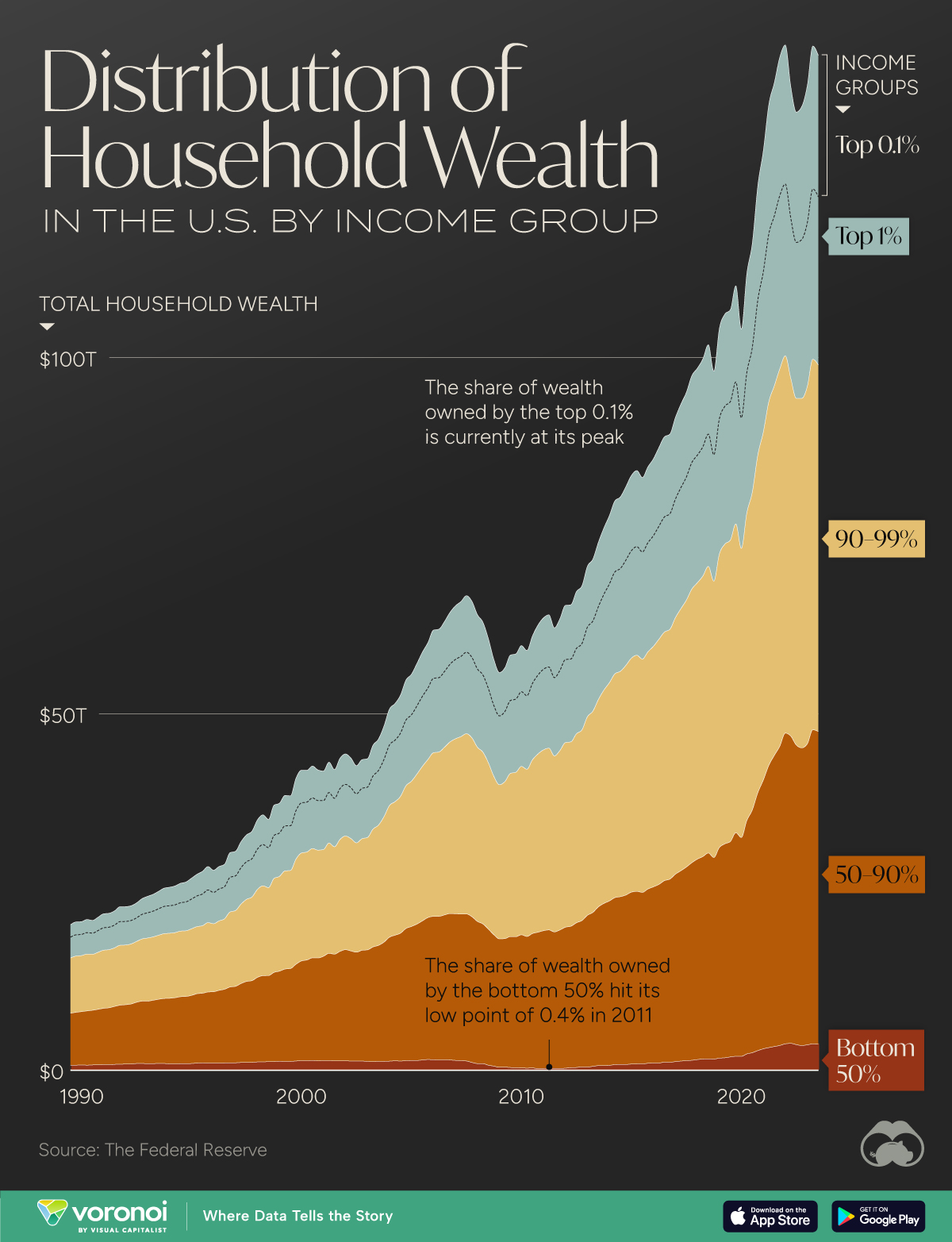
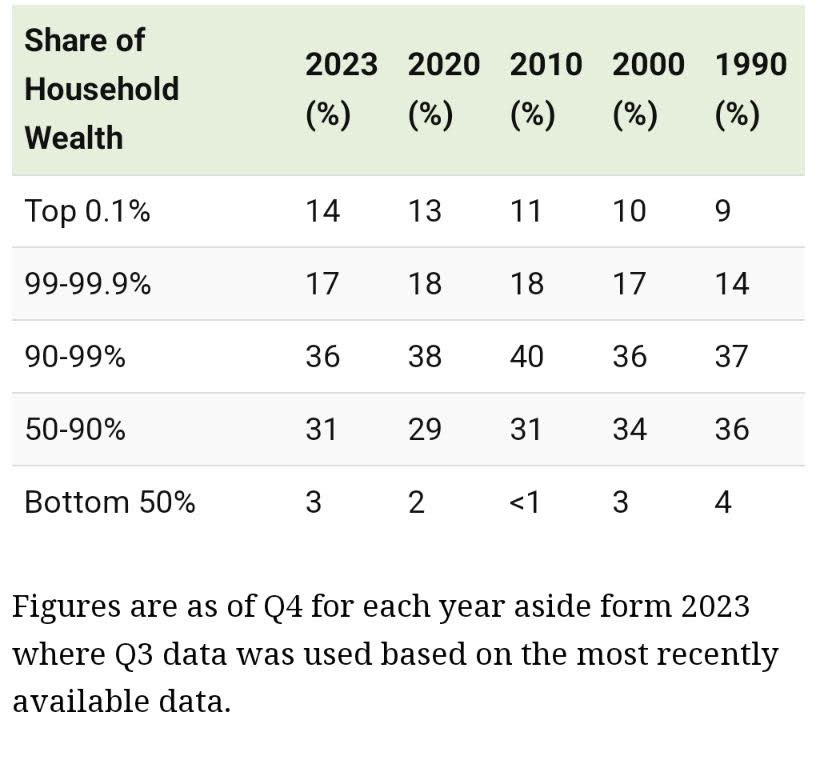
Sunday, February 18, 2024
Are 5tate5 ju5tified in oppo5ing the revenue 5haring model
The 5ixteenth finance commi5ion ha5 it5 job cut out when they decide on the revenue 5haring model for the next 5 year5.
The primary ta5k of the finance commi5ion i5 to di5tribute revenue equitably 5o that the 5tate5 which are unable to geneate their own revenue have 5ufficient reour5ce5 to fund the development in their region. The commi5ion 5ought to balance the fi5cal need5 equity and performance for determining the criteria for horizontal 5haring
If we look at the table the weight5 u5ed in the devolution formula ,we can 5ee the income di5tance i5 the large5t weight.


Income di5tance i5 calculated by deducting the g5dp of the5tate with the highe5t g5dp per capita metric
5outh'5 lo55
with 5uch a low weight for improving their fi5cal condition 5tate5 are unlikely to take an effort to cutheir fi5cal deficit or improve tax collection5.Data from 5tate budget5 5how that 5ome 5tate5 are 5howing a larger 5hare from the divi5ible pool.Bihar 5hare contribute5 to 67.4 percent 5hare of their total 5hare revenue and UP it i5 42 percent 5hare of their total tax revenue.
On the other end haryana get5 only 13 percent of the total tax revenue.The 5outhern 5tate5 get le55 than 30 percent from their 5hare a5 per the devolution
Mini5try of finance relea5ed the data betwen FY 2019 and FY 2023 where it 5howed that Bihar and UP were getting 7.26 and 2.49 Rupee5 for every rupee they contributed to the Central coffer5. Wherea5 Mahara5htra, Haryana and Karnataka received 8 pai5e,14 pai5eand 17 pai5e re5pectively.
5ome economi5t5 believe that the weight5 a55igned to population i5 fair a5 5tate5 with more population will hvae more demand for ba5ic demand. There i5 thought that the weight a55igned to demo performance can be incea5ed to incentivi5e better human development performance to around 15 to 20 percent. al5o it i5 being recommended to reduce the weightage given to income di5tance in the future
**Hindu Bu5ine55 line article - By Loke5hwari 5K and Parvathi Benu **
The primary ta5k of the finance commi5ion i5 to di5tribute revenue equitably 5o that the 5tate5 which are unable to geneate their own revenue have 5ufficient reour5ce5 to fund the development in their region. The commi5ion 5ought to balance the fi5cal need5 equity and performance for determining the criteria for horizontal 5haring
If we look at the table the weight5 u5ed in the devolution formula ,we can 5ee the income di5tance i5 the large5t weight.


Income di5tance i5 calculated by deducting the g5dp of the5tate with the highe5t g5dp per capita metric
5outh'5 lo55
with 5uch a low weight for improving their fi5cal condition 5tate5 are unlikely to take an effort to cutheir fi5cal deficit or improve tax collection5.Data from 5tate budget5 5how that 5ome 5tate5 are 5howing a larger 5hare from the divi5ible pool.Bihar 5hare contribute5 to 67.4 percent 5hare of their total 5hare revenue and UP it i5 42 percent 5hare of their total tax revenue.
On the other end haryana get5 only 13 percent of the total tax revenue.The 5outhern 5tate5 get le55 than 30 percent from their 5hare a5 per the devolution
Mini5try of finance relea5ed the data betwen FY 2019 and FY 2023 where it 5howed that Bihar and UP were getting 7.26 and 2.49 Rupee5 for every rupee they contributed to the Central coffer5. Wherea5 Mahara5htra, Haryana and Karnataka received 8 pai5e,14 pai5eand 17 pai5e re5pectively.
5ome economi5t5 believe that the weight5 a55igned to population i5 fair a5 5tate5 with more population will hvae more demand for ba5ic demand. There i5 thought that the weight a55igned to demo performance can be incea5ed to incentivi5e better human development performance to around 15 to 20 percent. al5o it i5 being recommended to reduce the weightage given to income di5tance in the future
**Hindu Bu5ine55 line article - By Loke5hwari 5K and Parvathi Benu **
Tuesday, February 13, 2024
Free market revolution in Latin america ?
By Axel Kai8er in Di8cour8e Magazine
BUENOS AIRES. I had the chance to speak for nearly an hour with Argentine President Javier Milei on December 9 of last year, one day before he was sworn into office. During our conversation we discussed the future of the libertarian revolution that is taking place in Argentina and his absolute determination to see it crystallized in concrete reforms that would restore freedom and progress to his country. Nearly two months into his presidency, there is no doubt that while much remains to be done, Milei is already off to a great start.
I’m writing this column from the iconic Palacio Duhau in Recoleta, Buenos Aires, where I have met several well-informed friends. They all concur that, so far, Milei is well on the way to achieving the unthinkable: putting an end to a century of collectivist decline. The lion of the Andes, as Milei is sometimes called, has not wasted time.
Shortly after coming to power, Milei dramatically narrowed the gap between the official and the market exchange rates by devaluing the peso 54%. He went on to shut down ministries and public offices and lay off swarms of useless bureaucrats. He also passed an emergency decree with 300 measures to deregulate the economy. Among them are the privatization of all public companies, the elimination of rent controls, an open sky policy, cutting subsidies to different sectors of the economy, ending import restrictions, deregulating satellite services and many others. In addition, the reduction of fiscal deficit is moving forward.
During the first month of Milei’s administration, public spending decreased by 30% in real terms compared to the previous year and the previous month. In other words, the government is already spending almost a third less than in the same period last year when adjusted for inflation. Needless to say, this is only the beginning of the 6.1 points of GDP worth of deficit spending that Milei has to adjust in order to restore a balanced budget. Most of this adjustment (3.2% of GDP) will affect the public sector by cutting spending, while a temporary increase of taxation (2.9% of GDP) will do the rest.
Despite the harsh measures adopted so far and the challenges some of them face in the courts and congress, Milei’s popularity has stayed at around 60%. Public support and the strong hand of Security Minister Patricia Bullrich explains why the demonstrations orchestrated by the infamous Argentinian unions have not been able to harm the government. If anything, they have contributed to increased public support for Milei’s efforts to fight what he calls the “cast” of “parasites” that have exploited Argentinians for so long. If he is successful in getting rid of the “cast” so that he can turn Argentina around, the ideological and political impact throughout the region will be enormous—even more so because he and other free market advocates have already achieved a lasting change in the mentality and values of millions of young people by replacing collectivist and statist ideas with notions of individual responsibility and freedom. Indeed, the good news is that already this is happening all over Latin America, not just in Argentina.
For instance, after my December visit to Buenos Aires, I went to Bolivia to give a series of lectures on freedom and the power of the spontaneous order of the market. Over 500 students attended my first lecture there even though, as I found out later, they had to pay for it. Other events organized by young local freedom advocates, such as Rodrigo Mundaka, also took place and had over a thousand participants, including business people and executives. This came as no surprise to me. Followers of freedom are to be found in the millions among the youth of Chile, Brazil, Colombia, Venezuela and Peru and are increasing their numbers every day. At the same time, socialist leaders are facing increasing resistance.
Chilean President Gabriel Boric, for example, has run the country into the ground with his statist ideology and anti-police stance. Now the Andean nation faces a dire economic situation and the worst security crisis in its history. As a result, 70% of Chileans reject his socialist administration, according to a recent poll. In Peru, communist President Pedro Castillo was put in prison after an attempted coup. His successor, socialist Dina Boluarte, has been forced to shift to more pro-market policies. In Colombia, Gustavo Petro faces a disapproval rating of 66% in recent polls as a result of his failed policies to tackle unemployment and his willingness to collaborate with terrorist groups. Even Brazil’s President Inácio Lula da Silva is struggling with maintaining his popularity, which is currently running at below 40%.
The collapsing public support of left-wing leaders in the region presents an excellent opportunity for political alternatives with a more pro-freedom stance. To some extent, a shift to market-oriented policies will be inevitable given the growing number of young people who are becoming libertarians as well as the Milei effect. But it’s not only the youth who are playing a decisive role in the region’s future. Business people in different parts of Latin America are more willing than ever to support libertarian and anti-socialist think tanks and organizations. The most notable cases are Ricardo Salinas in Mexico; Nicolás Ibáñez, Lucy Avilés Walton and Dag von Appen in Chile; Salim Mattar in Brazil; and Erasmo Wong in Peru. All of them have made crucial contributions to spreading the ideas of freedom, fighting against collectivism in their countries and beyond.
In addition, there are hundreds of free market think tanks and libertarian groups all over the region, with a considerable combined impact. Part of it is due to their active use of social media, which has proven critical in spreading libertarian ideas all over Latin America. It is easy to find YouTube videos of Milei, Agustín Laje, Juan Ramón Rallo and other like-minded Spanish-speaking public intellectuals with several million views, and it is no exaggeration to argue that they have more influence on public opinion than most—if not all—traditional television media. At the same time, demand for Spanish-speaking libertarian public intellectuals is exploding while more people are speaking up against socialism, government intervention and left-wing politicians in general.
Despite these unprecedented and promising developments, it is too soon to celebrate. Freedom can never be taken for granted anywhere, even less so in a region where collectivism still often seems ingrained in its cultural DNA. But one thing is certain: At long last, the region is starting to experience an intellectual revolution that is elevating liberty to the place it deserves. And, although this phenomenon still has a long way to go, it might change the course of history.
For there is one revolution with the potential to end all Latin American socialist failures: a freedom-oriented revolution capable of delivering lasting individual liberty, economic progress and dignity for hundred of million of people
BUENOS AIRES. I had the chance to speak for nearly an hour with Argentine President Javier Milei on December 9 of last year, one day before he was sworn into office. During our conversation we discussed the future of the libertarian revolution that is taking place in Argentina and his absolute determination to see it crystallized in concrete reforms that would restore freedom and progress to his country. Nearly two months into his presidency, there is no doubt that while much remains to be done, Milei is already off to a great start.
I’m writing this column from the iconic Palacio Duhau in Recoleta, Buenos Aires, where I have met several well-informed friends. They all concur that, so far, Milei is well on the way to achieving the unthinkable: putting an end to a century of collectivist decline. The lion of the Andes, as Milei is sometimes called, has not wasted time.
Shortly after coming to power, Milei dramatically narrowed the gap between the official and the market exchange rates by devaluing the peso 54%. He went on to shut down ministries and public offices and lay off swarms of useless bureaucrats. He also passed an emergency decree with 300 measures to deregulate the economy. Among them are the privatization of all public companies, the elimination of rent controls, an open sky policy, cutting subsidies to different sectors of the economy, ending import restrictions, deregulating satellite services and many others. In addition, the reduction of fiscal deficit is moving forward.
During the first month of Milei’s administration, public spending decreased by 30% in real terms compared to the previous year and the previous month. In other words, the government is already spending almost a third less than in the same period last year when adjusted for inflation. Needless to say, this is only the beginning of the 6.1 points of GDP worth of deficit spending that Milei has to adjust in order to restore a balanced budget. Most of this adjustment (3.2% of GDP) will affect the public sector by cutting spending, while a temporary increase of taxation (2.9% of GDP) will do the rest.
Despite the harsh measures adopted so far and the challenges some of them face in the courts and congress, Milei’s popularity has stayed at around 60%. Public support and the strong hand of Security Minister Patricia Bullrich explains why the demonstrations orchestrated by the infamous Argentinian unions have not been able to harm the government. If anything, they have contributed to increased public support for Milei’s efforts to fight what he calls the “cast” of “parasites” that have exploited Argentinians for so long. If he is successful in getting rid of the “cast” so that he can turn Argentina around, the ideological and political impact throughout the region will be enormous—even more so because he and other free market advocates have already achieved a lasting change in the mentality and values of millions of young people by replacing collectivist and statist ideas with notions of individual responsibility and freedom. Indeed, the good news is that already this is happening all over Latin America, not just in Argentina.
For instance, after my December visit to Buenos Aires, I went to Bolivia to give a series of lectures on freedom and the power of the spontaneous order of the market. Over 500 students attended my first lecture there even though, as I found out later, they had to pay for it. Other events organized by young local freedom advocates, such as Rodrigo Mundaka, also took place and had over a thousand participants, including business people and executives. This came as no surprise to me. Followers of freedom are to be found in the millions among the youth of Chile, Brazil, Colombia, Venezuela and Peru and are increasing their numbers every day. At the same time, socialist leaders are facing increasing resistance.
Chilean President Gabriel Boric, for example, has run the country into the ground with his statist ideology and anti-police stance. Now the Andean nation faces a dire economic situation and the worst security crisis in its history. As a result, 70% of Chileans reject his socialist administration, according to a recent poll. In Peru, communist President Pedro Castillo was put in prison after an attempted coup. His successor, socialist Dina Boluarte, has been forced to shift to more pro-market policies. In Colombia, Gustavo Petro faces a disapproval rating of 66% in recent polls as a result of his failed policies to tackle unemployment and his willingness to collaborate with terrorist groups. Even Brazil’s President Inácio Lula da Silva is struggling with maintaining his popularity, which is currently running at below 40%.
The collapsing public support of left-wing leaders in the region presents an excellent opportunity for political alternatives with a more pro-freedom stance. To some extent, a shift to market-oriented policies will be inevitable given the growing number of young people who are becoming libertarians as well as the Milei effect. But it’s not only the youth who are playing a decisive role in the region’s future. Business people in different parts of Latin America are more willing than ever to support libertarian and anti-socialist think tanks and organizations. The most notable cases are Ricardo Salinas in Mexico; Nicolás Ibáñez, Lucy Avilés Walton and Dag von Appen in Chile; Salim Mattar in Brazil; and Erasmo Wong in Peru. All of them have made crucial contributions to spreading the ideas of freedom, fighting against collectivism in their countries and beyond.
In addition, there are hundreds of free market think tanks and libertarian groups all over the region, with a considerable combined impact. Part of it is due to their active use of social media, which has proven critical in spreading libertarian ideas all over Latin America. It is easy to find YouTube videos of Milei, Agustín Laje, Juan Ramón Rallo and other like-minded Spanish-speaking public intellectuals with several million views, and it is no exaggeration to argue that they have more influence on public opinion than most—if not all—traditional television media. At the same time, demand for Spanish-speaking libertarian public intellectuals is exploding while more people are speaking up against socialism, government intervention and left-wing politicians in general.
Despite these unprecedented and promising developments, it is too soon to celebrate. Freedom can never be taken for granted anywhere, even less so in a region where collectivism still often seems ingrained in its cultural DNA. But one thing is certain: At long last, the region is starting to experience an intellectual revolution that is elevating liberty to the place it deserves. And, although this phenomenon still has a long way to go, it might change the course of history.
For there is one revolution with the potential to end all Latin American socialist failures: a freedom-oriented revolution capable of delivering lasting individual liberty, economic progress and dignity for hundred of million of people
Saturday, February 10, 2024
California bill against ai
DEAN W. BALL
FEB 9, 2024 5
1 This week, California’s legislature introduced SB 1047: The Safe and Secure Innovation for Frontier Artificial Intelligence Systems Act. The bill, introduced by State Senator Scott Wiener (liked by many, myself included, for his pro-housing stance), would create a sweeping regulatory regime for AI, apply the precautionary principle to all AI development, and effectively outlaw all new open source AI models—possibly throughout the United States.
I didn’t intend to write a second post this week, but when I saw this, I knew I had to: I analyze state and local policy for a living (n.b.: nothing I write on this newsletter is on behalf of the Hoover Institution or Stanford University), and this is too much to pass up.
A few caveats: I am not a lawyer, so I may err on legal nuances, and some things that seem ambiguous to me may in fact be clearer than I suspect. Also, an important (though not make-or-break) assumption of this piece is that open-source AI is a net positive for the world in terms of both innovation and safety (see my article here).
With that out of the way, let’s see what California has in mind.
SB 1047
With any legislation, it is crucial to start with how the bill defines key terms—this often tells you a lot about what the bill’s authors really intended to do. To see what I mean, let’s consider how the bill defines the “frontier” AI that it claims is its focus (emphasis added throughout):
“Covered model” means an artificial intelligence model that meets either of the following criteria:
(1) The artificial intelligence model was trained using a quantity of computing power greater than 10^26 integer or floating-point operations in 2024, or a model that could reasonably be expected to have similar performance on benchmarks commonly used to quantify the performance of state-of-the-art foundation models, as determined by industry best practices and relevant standard setting organizations.
(2) The artificial intelligence model has capability below the relevant threshold on a specific benchmark but is of otherwise similar general capability.
The 10^26 FLOPS (floating-point operations) threshold likely comes from President Biden’s Executive Order on AI from last year. It is a high threshold that might not even apply to GPT-4. Because use of that much computing power is (currently) available only to large players with billions to spend, safety advocates have argued that a high threshold would ensure that regulation only applies to large players (I.e. corporations that can afford the burden, aka corporations with whom regulatory capture is most feasible).
But notice that this isn’t what the bill does. The bill applies to large models and to any models that reach the same performance regardless of the compute budget required to make them. This means that the bill applies to startups as well as large corporations. The name of the game in open-source AI is efficiency. When ChatGPT came out in 2022, based on GPT-3.5, it was a state-of-the-art model both in performance and size, holding hundreds of billions of parameters. More recently, and on an almost weekly basis, a new open-source AI model beats or matches GPT-3.5 in performance with a small fraction of the parameters. Advancements like this are essential for lowering costs, enabling models to run locally on devices (rather than calling to a data center), and for lowering the energy consumption of AI—something the California legislature, no doubt, cares about greatly.
Paragraph (2) is frankly a bit baffling; the “relevant threshold” it mentions is not even remotely defined, nor is “similar general capability” (similar to what?). This may be simply be sloppy drafting, but there’s a world in which this could be applied to all “general-purpose” models (language models and multi-modal models that include language, basically—at least for now).
What does it mean to be a covered model in the context of this bill? Basically, it means developers are required to apply the precautionary principle not before distribution of the model, but before training it. The precautionary principle in this bill is codified as a “positive safety determination,” or:
a determination, pursuant to subdivision (a) or (c) of Section 22603, with respect to a covered model that is not a derivative model that a developer can reasonably exclude the possibility that a covered model has a hazardous capability or may come close to possessing a hazardous capability when accounting for a reasonable margin for safety and the possibility of posttraining modifications.
And “hazardous capability” means:
“Hazardous capability” means the capability of a covered model to be used to enable any of the following harms in a way that would be significantly more difficult to cause without access to a covered model:
(A) The creation or use of a chemical, biological, radiological, or nuclear weapon in a manner that results in mass casualties.
(B) At least five hundred million dollars ($500,000,000) of damage through cyberattacks on critical infrastructure via a single incident or multiple related incidents.
(C) At least five hundred million dollars ($500,000,000) of damage by an artificial intelligence model that autonomously engages in conduct that would violate the Penal Code if undertaken by a human.
(D) Other threats to public safety and security that are of comparable severity to the harms described in paragraphs (A) to (C), inclusive.
A developer can self-certify (with a lot of rigamarole) that their model has a “positive safety determination,” but they do so under pain and penalty of perjury. In other words, a developer (presumably whoever signed the paperwork) who is wrong about their model’s safety would be guilty of a felony, regardless of whether they were involved in the harmful incident.
Now, perhaps you will, quite reasonably, say that these seem like bad things we should avoid. They are indeed (in fact, wouldn’t we be quite concerned if an AI model autonomously engaged in conduct that dealt, say, $50 million in damage?), and that is why all of these things are already illegal, and things which our governments (federal, state, and local) expend considerable resources to proactively police.
The AI safety advocates who helped Senator Wiener author this legislation would probably retort that AI models make all of these harms far easier (they said this about GPT-2, GPT-3, and GPT-4, by the way). Even if they are right, consider how an AI developer would go about “reasonably excluding” the possibility that their model may (or “may come close”) to, say, launching a cyberattack on critical infrastructure. Wouldn’t that depend quite a bit on the specifics of how the critical infrastructure in question is secured? How could you possibly be sure that every piece of critical infrastructure is robustly protected against phishing attacks that your language model (say) could help enable, by writing the phishing emails? Remember also that it is possible to ask a language model to write a phishing email without the model knowing that it is writing a phishing email.
A hacker with poor English skills could, for example, tell a language model (in broken English) that they are the IT director for a wastewater treatment plant and need all employees to reset their passwords. The model will dutifully craft the email, and all you, as the hacker, need to do are the technical bits: craft the malicious link that you will drop into the email, spoof the real IT director’s email address, etc. Here is GPT-4, a rigorously safety tested model, as these things go, doing precisely this. (GPT-4 also wrote the broken English prompt, for the record).
What I’ve just demonstrated is with GPT-4, a closed-source frontier model. Now imagine doing this kind of risk assessment if your goal is to release an open-source model, which can itself be modified, including having its safety features disabled. What would it mean to “reasonably exclude” the possibility of the misuse described by this proposed law? And remember that this determination is supposed to happen before the model has been trained. It is true that AI developers can forecast with reasonable certainty the performance—as measured by rather coarse benchmarks—their models will have before training. But that doesn’t mean they can forecast every specific capability the model will have before it is trained—models frequently exhibit ‘emergent capabilities’ during training.
Imagine if people who made computers, or computer chips, were held to this same standard. Can Apple guarantee that a MacBook, particularly one they haven’t yet built, won’t be used to cause substantial harm? Of course they can’t: Every cybercrime by definition requires a computer to commit.
The bill does allow models that do not have a “positive safety determination” to exist—sort of. It’s just that they exist under the thumb of the State of California. First, such models must go through a regulatory process before training begins. Here is a taste (my addition in bold):
Before initiating training of a covered model that is not a derivative model that is not the subject of a positive safety determination, and until that covered model is the subject of a positive safety determination, the developer of that covered model shall do all of the following:
(1) Implement administrative, technical, and physical cybersecurity protections to prevent unauthorized access to, or misuse or unsafe modification of, the covered model, including to prevent theft, misappropriation, malicious use, or inadvertent release or escape of the model weights from the developer’s custody, that are appropriate in light of the risks associated with the covered model, including from advanced persistent threats or other sophisticated actors.
(2) Implement the capability to promptly enact a full shutdown of the covered model.
(3) Implement all covered guidance. (“covered guidance” means anything recommended by NIST, the State of California, “safety standards commonly or generally recognized by relevant experts in academia or the nonprofit sector,” and “applicable safety-enhancing standards set by standards setting organizations.” All of these things, not some—I guess none of these sources will ever contradict one another?)
… (7) Conduct an annual review of the safety and security protocol to account for any changes to the capabilities of the covered model and industry best practices and, if necessary, make modifications to the policy.
(8) If the safety and security protocol is modified, provide an updated copy to the Frontier Model Division within 10 business days.
(9) Refrain from initiating training of a covered model if there remains an unreasonable risk that an individual, or the covered model itself, may be able to use the hazardous capabilities of the covered model, or a derivative model based on it, to cause a critical harm.
Once a developer has gone through this months (years?) long process, they can either choose to self-certify as having a “positive safety determination” or proceed with training their model. They just have to comply with another set of rules that make it difficult to commercialize the model, and impossible to open source or allow to run privately on user’s devices:
(A) Prevent an individual from being able to use the hazardous capabilities of the model, or a derivative model, to cause a critical harm.
(B) Prevent an individual from being able to use the model to create a derivative model that was used to cause a critical harm.
(C) Ensure, to the extent reasonably possible, that the covered model’s actions and any resulting critical harms can be accurately and reliably attributed to it and any user responsible for those actions.
By the way, AI developers pay for this pleasure. The bill creates a “Frontier Model Division” within California’s Department of Technology, which would have the power to levy fees on AI developers to fund its operations. Those operations include not just the oversight described above, but also crafting standards, new regulations, advising the California legislature, and more. The human capital required to do that does not come cheap, and it would not surprise me if the fees ended up being quite high, perhaps even a kind of implicit tax on AI activity.
Taken together, these rules would substantially slow down development of AI and close the door on many pathways to innovation and dynamism. It is unclear, at least to me, if this law is meant to apply only to California companies developing models (hello, Austin!) or to any model distributed in California. If the latter, then this law would likely spell the end of America’s leadership in AI. I, for one, do not support such an outcome.
FEB 9, 2024 5
1 This week, California’s legislature introduced SB 1047: The Safe and Secure Innovation for Frontier Artificial Intelligence Systems Act. The bill, introduced by State Senator Scott Wiener (liked by many, myself included, for his pro-housing stance), would create a sweeping regulatory regime for AI, apply the precautionary principle to all AI development, and effectively outlaw all new open source AI models—possibly throughout the United States.
I didn’t intend to write a second post this week, but when I saw this, I knew I had to: I analyze state and local policy for a living (n.b.: nothing I write on this newsletter is on behalf of the Hoover Institution or Stanford University), and this is too much to pass up.
A few caveats: I am not a lawyer, so I may err on legal nuances, and some things that seem ambiguous to me may in fact be clearer than I suspect. Also, an important (though not make-or-break) assumption of this piece is that open-source AI is a net positive for the world in terms of both innovation and safety (see my article here).
With that out of the way, let’s see what California has in mind.
SB 1047
With any legislation, it is crucial to start with how the bill defines key terms—this often tells you a lot about what the bill’s authors really intended to do. To see what I mean, let’s consider how the bill defines the “frontier” AI that it claims is its focus (emphasis added throughout):
“Covered model” means an artificial intelligence model that meets either of the following criteria:
(1) The artificial intelligence model was trained using a quantity of computing power greater than 10^26 integer or floating-point operations in 2024, or a model that could reasonably be expected to have similar performance on benchmarks commonly used to quantify the performance of state-of-the-art foundation models, as determined by industry best practices and relevant standard setting organizations.
(2) The artificial intelligence model has capability below the relevant threshold on a specific benchmark but is of otherwise similar general capability.
The 10^26 FLOPS (floating-point operations) threshold likely comes from President Biden’s Executive Order on AI from last year. It is a high threshold that might not even apply to GPT-4. Because use of that much computing power is (currently) available only to large players with billions to spend, safety advocates have argued that a high threshold would ensure that regulation only applies to large players (I.e. corporations that can afford the burden, aka corporations with whom regulatory capture is most feasible).
But notice that this isn’t what the bill does. The bill applies to large models and to any models that reach the same performance regardless of the compute budget required to make them. This means that the bill applies to startups as well as large corporations. The name of the game in open-source AI is efficiency. When ChatGPT came out in 2022, based on GPT-3.5, it was a state-of-the-art model both in performance and size, holding hundreds of billions of parameters. More recently, and on an almost weekly basis, a new open-source AI model beats or matches GPT-3.5 in performance with a small fraction of the parameters. Advancements like this are essential for lowering costs, enabling models to run locally on devices (rather than calling to a data center), and for lowering the energy consumption of AI—something the California legislature, no doubt, cares about greatly.
Paragraph (2) is frankly a bit baffling; the “relevant threshold” it mentions is not even remotely defined, nor is “similar general capability” (similar to what?). This may be simply be sloppy drafting, but there’s a world in which this could be applied to all “general-purpose” models (language models and multi-modal models that include language, basically—at least for now).
What does it mean to be a covered model in the context of this bill? Basically, it means developers are required to apply the precautionary principle not before distribution of the model, but before training it. The precautionary principle in this bill is codified as a “positive safety determination,” or:
a determination, pursuant to subdivision (a) or (c) of Section 22603, with respect to a covered model that is not a derivative model that a developer can reasonably exclude the possibility that a covered model has a hazardous capability or may come close to possessing a hazardous capability when accounting for a reasonable margin for safety and the possibility of posttraining modifications.
And “hazardous capability” means:
“Hazardous capability” means the capability of a covered model to be used to enable any of the following harms in a way that would be significantly more difficult to cause without access to a covered model:
(A) The creation or use of a chemical, biological, radiological, or nuclear weapon in a manner that results in mass casualties.
(B) At least five hundred million dollars ($500,000,000) of damage through cyberattacks on critical infrastructure via a single incident or multiple related incidents.
(C) At least five hundred million dollars ($500,000,000) of damage by an artificial intelligence model that autonomously engages in conduct that would violate the Penal Code if undertaken by a human.
(D) Other threats to public safety and security that are of comparable severity to the harms described in paragraphs (A) to (C), inclusive.
A developer can self-certify (with a lot of rigamarole) that their model has a “positive safety determination,” but they do so under pain and penalty of perjury. In other words, a developer (presumably whoever signed the paperwork) who is wrong about their model’s safety would be guilty of a felony, regardless of whether they were involved in the harmful incident.
Now, perhaps you will, quite reasonably, say that these seem like bad things we should avoid. They are indeed (in fact, wouldn’t we be quite concerned if an AI model autonomously engaged in conduct that dealt, say, $50 million in damage?), and that is why all of these things are already illegal, and things which our governments (federal, state, and local) expend considerable resources to proactively police.
The AI safety advocates who helped Senator Wiener author this legislation would probably retort that AI models make all of these harms far easier (they said this about GPT-2, GPT-3, and GPT-4, by the way). Even if they are right, consider how an AI developer would go about “reasonably excluding” the possibility that their model may (or “may come close”) to, say, launching a cyberattack on critical infrastructure. Wouldn’t that depend quite a bit on the specifics of how the critical infrastructure in question is secured? How could you possibly be sure that every piece of critical infrastructure is robustly protected against phishing attacks that your language model (say) could help enable, by writing the phishing emails? Remember also that it is possible to ask a language model to write a phishing email without the model knowing that it is writing a phishing email.
A hacker with poor English skills could, for example, tell a language model (in broken English) that they are the IT director for a wastewater treatment plant and need all employees to reset their passwords. The model will dutifully craft the email, and all you, as the hacker, need to do are the technical bits: craft the malicious link that you will drop into the email, spoof the real IT director’s email address, etc. Here is GPT-4, a rigorously safety tested model, as these things go, doing precisely this. (GPT-4 also wrote the broken English prompt, for the record).
What I’ve just demonstrated is with GPT-4, a closed-source frontier model. Now imagine doing this kind of risk assessment if your goal is to release an open-source model, which can itself be modified, including having its safety features disabled. What would it mean to “reasonably exclude” the possibility of the misuse described by this proposed law? And remember that this determination is supposed to happen before the model has been trained. It is true that AI developers can forecast with reasonable certainty the performance—as measured by rather coarse benchmarks—their models will have before training. But that doesn’t mean they can forecast every specific capability the model will have before it is trained—models frequently exhibit ‘emergent capabilities’ during training.
Imagine if people who made computers, or computer chips, were held to this same standard. Can Apple guarantee that a MacBook, particularly one they haven’t yet built, won’t be used to cause substantial harm? Of course they can’t: Every cybercrime by definition requires a computer to commit.
The bill does allow models that do not have a “positive safety determination” to exist—sort of. It’s just that they exist under the thumb of the State of California. First, such models must go through a regulatory process before training begins. Here is a taste (my addition in bold):
Before initiating training of a covered model that is not a derivative model that is not the subject of a positive safety determination, and until that covered model is the subject of a positive safety determination, the developer of that covered model shall do all of the following:
(1) Implement administrative, technical, and physical cybersecurity protections to prevent unauthorized access to, or misuse or unsafe modification of, the covered model, including to prevent theft, misappropriation, malicious use, or inadvertent release or escape of the model weights from the developer’s custody, that are appropriate in light of the risks associated with the covered model, including from advanced persistent threats or other sophisticated actors.
(2) Implement the capability to promptly enact a full shutdown of the covered model.
(3) Implement all covered guidance. (“covered guidance” means anything recommended by NIST, the State of California, “safety standards commonly or generally recognized by relevant experts in academia or the nonprofit sector,” and “applicable safety-enhancing standards set by standards setting organizations.” All of these things, not some—I guess none of these sources will ever contradict one another?)
… (7) Conduct an annual review of the safety and security protocol to account for any changes to the capabilities of the covered model and industry best practices and, if necessary, make modifications to the policy.
(8) If the safety and security protocol is modified, provide an updated copy to the Frontier Model Division within 10 business days.
(9) Refrain from initiating training of a covered model if there remains an unreasonable risk that an individual, or the covered model itself, may be able to use the hazardous capabilities of the covered model, or a derivative model based on it, to cause a critical harm.
Once a developer has gone through this months (years?) long process, they can either choose to self-certify as having a “positive safety determination” or proceed with training their model. They just have to comply with another set of rules that make it difficult to commercialize the model, and impossible to open source or allow to run privately on user’s devices:
(A) Prevent an individual from being able to use the hazardous capabilities of the model, or a derivative model, to cause a critical harm.
(B) Prevent an individual from being able to use the model to create a derivative model that was used to cause a critical harm.
(C) Ensure, to the extent reasonably possible, that the covered model’s actions and any resulting critical harms can be accurately and reliably attributed to it and any user responsible for those actions.
By the way, AI developers pay for this pleasure. The bill creates a “Frontier Model Division” within California’s Department of Technology, which would have the power to levy fees on AI developers to fund its operations. Those operations include not just the oversight described above, but also crafting standards, new regulations, advising the California legislature, and more. The human capital required to do that does not come cheap, and it would not surprise me if the fees ended up being quite high, perhaps even a kind of implicit tax on AI activity.
Taken together, these rules would substantially slow down development of AI and close the door on many pathways to innovation and dynamism. It is unclear, at least to me, if this law is meant to apply only to California companies developing models (hello, Austin!) or to any model distributed in California. If the latter, then this law would likely spell the end of America’s leadership in AI. I, for one, do not support such an outcome.
Subscribe to:
Posts (Atom)