
Vox article “What is GDP and why does it matter?”, rewritten in an original voice and structured for a policy, economics, or informed general-audience readership. The emphasis is on clarity, balance, and practical relevance rather than advocacy.
Why GDP Still Matters — Even When It’s Not Enough
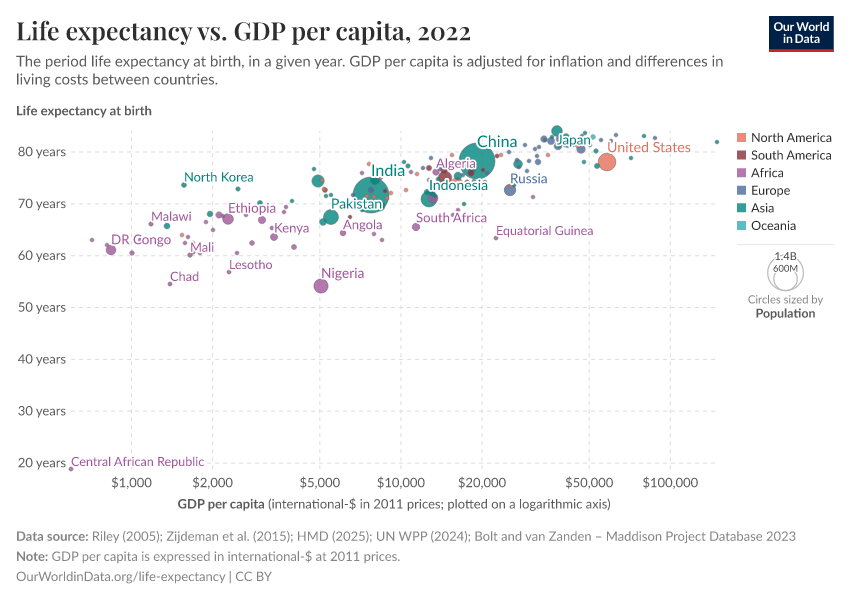
Gross Domestic Product (GDP) is one of the most criticised numbers in public policy—and yet it remains one of the most relied upon. Economists, journalists, and policymakers regularly argue that GDP fails to capture happiness, well-being, inequality, or environmental sustainability. Many of these critiques are valid. Still, despite its limitations, GDP continues to play a central role in how governments understand economic progress.
The key question, then, is not whether GDP is perfect—it is not—but why it continues to matter, and what it actually tells us when used appropriately .
What GDP Really Measures
At its core, GDP is a national accounting framework. It measures the total market value of all final goods and services produced within a country over a given period of time.
Each element of this definition is intentional:
Market value means output is measured using actual prices.
Final goods and services avoids double-counting intermediate inputs.
Produced within a country distinguishes domestic output from imports.
Total ensures that GDP captures the entire economy, not just individual sectors.
GDP was never designed to measure happiness or social welfare. Its original purpose—developed during the Great Depression—was to provide policymakers with a reliable way to track overall economic activity and recovery. Judging GDP against standards it was never meant to meet misunderstands what the metric is designed to do.
The Common Critiques—and Why They Persist
Criticism of GDP generally falls into three categories:
What GDP excludes
GDP does not account for unpaid work, income distribution, environmental damage, or whether spending reflects positive or defensive behaviour (for example, rebuilding after a natural disaster).What GDP is sometimes mistaken for
GDP is often treated as a proxy for social progress or national well-being. When used this way, it inevitably disappoints.What GDP allegedly crowds out
Some critics argue that focusing on GDP leads policymakers to neglect health, education, inequality, and sustainability.
Importantly, even leading critics acknowledge that GDP should not be discarded. Instead, most argue it should sit within a broader “dashboard” of indicators. The issue, therefore, is not GDP itself, but how narrowly it is sometimes interpreted.
Why GDP Correlates with What People Care About
Despite its narrow scope, GDP is strongly associated with outcomes that matter deeply to societies:
Higher life expectancy
Lower infant mortality
Greater educational attainment
Reduced extreme poverty
Higher average life satisfaction
These relationships are not perfect, but they are remarkably consistent across countries and over time. Economic production creates the capacity to fund healthcare systems, education, infrastructure, environmental protection, and social safety nets. Without that productive base, progress in these areas is difficult to sustain.
In other words, GDP does not guarantee human flourishing—but human flourishing is far harder without it.
The Practical Advantages of GDP
GDP remains dominant not only because of what it correlates with, but because of how it functions in practice.
Timeliness: GDP is produced quarterly (and often estimated in real time), allowing policymakers to respond quickly to recessions or overheating.
Comparability: GDP allows comparisons across countries and across decades, enabling long-term economic analysis.
Aggregation: It condenses millions of transactions into a single, interpretable figure.
Policy relevance: Central banks, finance ministries, and markets rely on GDP to assess capacity, demand, and cyclical conditions.
Alternative metrics—such as happiness indices or sustainability dashboards—are valuable complements, but they lack GDP’s frequency, consistency, and operational usefulness for day-to-day economic decision-making.
GDP as a Foundation, Not a Finish Line
The most defensible position is not that GDP measures everything that matters, but that it measures something essential: productive capacity. For most countries, at most stages of development, expanding that capacity improves a wide range of social outcomes simultaneously.
Trade-offs between GDP growth and other objectives do exist, particularly for advanced economies. But these are policy design challenges, not reasons to abandon the metric altogether. As with any tool, the problem arises when GDP is treated as an end in itself rather than a means.
Conclusion
GDP is neither obsolete nor omnipotent. It is a deliberately narrow measure that answers a specific and important question: How much economic activity is taking place? Used carefully—and alongside complementary indicators—it remains one of the most informative tools policymakers have.
Discarding GDP would not lead to better decisions. Understanding its strengths, limits, and proper role just might.
This blog post is based on and informed by analysis published by Vox and related economic research .

No comments:
Post a Comment